Showing posts with label water. Show all posts

Tuesday, July 23, 2013

how "do-it-yourself glacier" can save farmers

Last week, i found a pretty interesting article in The Economist.
Farmers in Kashmir have reduced length of growing period, because glaciers have disappeard. So a team has just rebuilt a glacier to make sure that farmers get their water when it is needed.
A pretty impressive story : just get yourself convinced.


Do-it-yourself glaciers


The iceman cometh

If climate change takes your local glacier away, why not build another?

AS THE climate warms, glaciers shrink. That is a problem for those who rely on meltwater from them to irrigate their crops: farmers living in the valleys above Leh, in Jammu and Kashmir, for example. Most of the lower-lying glaciers in the area they inhabit have disappeared, and those at higher altitudes have retreated by as much 10km (6 miles). The meltwater that farmers need to irrigate their newly sown crops used to arrive in March or April. Now it does not come until June—too late to be of much use in a place with such a short growing season.
Chewang Norphel, a retired civil engineer who lives in the area, thinks he has the answer: if the natural glaciers have gone, why not build artificial ones? That is what, for the past decade or so, he has been doing. Moreover, he has built the new glaciers in places where they will thaw at exactly the right time, and debouch their contents directly onto farmers’ fields.


Based on a Newton-and-the-apple-like moment, when he noticed that a stream in his garden had frozen under the shade of a poplar grove, though elsewhere it flowed freely, he realised that the way to build a glacier is to slow water’s flow and shield it from the sun. And that is what he and his team of engineers are now doing. They have diverted several streams in the worst-affected areas into canals that take long, meandering routes through shady, gently sloping topography. They have also built stone weirs across these canals at regular intervals, to slow the current down still further and encourage water to spill over the canal banks. As the spring thaw sets in and the canals fill up, this overspill freezes into a layer of ice. And as the process repeats itself over the ensuing months, these ice sheets stack up and get thicker.

taken from http://www.hydratelife.org/wp-content/uploads/2012/07/photo-via-gommes-dot-net1.png

So far, Mr Norphel and his team have built a dozen artificial glaciers in this way. The largest of them is a kilometre and a half long and two metres thick. Meltwater from these glaciers helps sustain the livelihood of thousands of farmers. Indeed, because the new glaciers are located where they will be most useful, rather than where the whims of geomorphology dictate, some farms are better-off now than they used to be in the days before the natural glaciers vanished. Land that previously yielded but one crop a year yields two. And water-loving cash crops like willow (whose twigs and branches are used in the area as building material) can be grown.

Picky glaciologists might argue that what Mr Norphel is creating are not, strictly speaking, glaciers. For a body of ice to qualify for glacier status, according to the textbooks, the layers it is made of must, by a process of repeated freezing and thawing, have metamorphosed into a solid block of granular ice. Mr Norphel’s have not—at least, not yet.

This distinction is, however, probably lost on Leh’s farmers. They are just glad to have their meltwater back. And Mr Norphel has identified several other places which might benefit from his technique, including Spiti in Himachal Pradesh, Gilgit-Baltistan over the border in Pakistan, and a number of valleys in Kazakhstan and Kyrgyzstan. In an area where neighbours do not always see eye to eye, the spread of his technique may perhaps put a positive spin on the phrase “diplomatic relations are glacial”.


Note that a film, entitled white knight has been made over Norphel's life.

Wednesday, July 17, 2013

A new community of practice launched on urban agriculture and water management

Yesterday, my father's research team envolved in Dakar, Senegal met for an internal colloquium on urban agriculture and water management to look back on 10 years of research. The idea was to identify the lessons learnt and how to continue after my father's retirement. 
The colloquium brought together researchers both from Switzerland and Senegal, former and current phd and master students, as well has NGOs representatives, donors as well as a real estate developer.
Cyril Royez, Urbamonde, Prof. Hans-Rudolf Pfeifer, University of Lausanne, Sedou Niang, Universty of Dakar, Francois Sugnaux, real estate developer.

Very different topics were adressed, from threats and benefits of re-use of urban waste water, to participatory processes, sense and non-sense of World Bank investment, the unexpected feed back of making drinking water accessible in urban area, impact from mercury from mining or food security. You can find all the presentations of this meeting on the conference page.

I moderated the closing discussions, aiming at understanding why the topic is relvant, at identifying the major challenges in urban agriculture and water management in Dakar, and how to continue the work, even if one of the main actor of the team, the professor is retiring.

Why is the topic of urban agriculture and water management in Senegal still relevant? 
In Dakar, two development plan co-exist, in one the area that is currently used for urban agriculture will be urbanised, in the other one it is kept. In both cases there are still many important research to do relatively to water and the issue of food security is not yet adressed. If the urban agriculture area is kept, then food is still produced locally and reuse of waste water can be an important topic as industrialisation is increasingly polluting the water. If the urban agriculture disapears, then food has to be produced outside the town and need to be brought in. One presentation has shown that  rural areas next to mining fields are full of mercury and food safety is compromissed. So it is very unclear if food brought to the town is safer than the food grown in town. So there are many challenges to yet be adressed in the field of urban agriculture and water management.

What are the major challenges ? 
In Senegal many World Bank report mentionned that if more save water is tapped and brought to town, more water will be around Dakar, and ground water levels will increase leading to 900'000 of flooded people without accounting for climate change. As tapped water increased floodings increased. Everyone knows the scientific results, but they are never put together nor communicated in a simple say to policy makers.
It seems that there is enough scientific knowledge around, the issue is how to put it in relation and get heart, i.e. communication to non-scientific public.


What can we do? 
There are many small proposal that have emerged, starting with making one depository that would include all the work that the people in the room as well as all other reserachers, students and phds that have worked on the project together.
Also, a long discussion focused on the necessity to do research that is relevant to the local people. The difference between communicating scientific result and action research has been wiledly discussed. It resulted in an agreement that introducing communities at early research stage and other participatory approaches are crucial for sucessful projects.
Also the value of working with non-scientific partners such as NGOs, like Urbamonde and ingenieur du monde, as well as economic partners such as real estate developer is enriching and these collaboration should be persuded.
Finally, all participants agreed that they want to continue interacting with each other and continue on the current collaborations by organizing meeting and working on new project.

Emilie presenting her work

It was intersting to see this diverse group forming a community of practice without knowing it. Hopefully, I managed to set up  my father's new blog, just before the meeting. It is ready now to become the initial plateform to support this community and give them a space in which they can interact and share their knowledge with non-scientists. So check it out, and don't forget to turn back.

Tuesday, July 9, 2013

another view on the Nile : an interview with Jennifer Veilleux

Recently i have commented a debate on the Nile that was produced by Aljazeera, which I found too much Egypt oriented not giving enough space to the Ethiopian gouvernemental representative to discuss what seemed to me the very few truely problematic issues concerning the impact of the dam on Egypt.

The Ethiopian governement is known as very protective of the information it shares about the dam. However, as part of her PhD Jennifer Veilleux, is one of the few people who could visit the dam region and interview freely local people about the dam. You can find many discussions about the Ethiopian and other dams on her own blog.


Jennifer Veilleux

In order to get some first hand information about the Renaissance Dam she has accepted to answer some of my questions.

Grand Ethiopian Renaissance Dam site, November 2012 © J.C. Veilleux 2012

Compared to other countries you have been doing research in, how difficult was it to get the authorisation to visit the grand renaissance dam area in Ethiopia?

This is an important question because this detail is the single hinge upon which rests the entirety of successful data collection. The simple answer is that it was not at all difficult, but took some homework and footwork to determine where I needed to go and who to ask for authorization. I have worked with governments in several countries to include Albania, Republic of Macedonia, and Laos, PDR regarding national level projects and have never experienced absolute blocks to my requests for access. In most places the process is just a matter of patience. The response of the Ethiopian government to my research inquiries and intentions was open and accepting, and they took things a step further to assist me with logistics. The officials I spoke with are clearly proud and excited about the Grand Ethiopian Renaissance Dam project and other project-related development. They did not appear to me at all hesitant to have the project covered by a foreign researcher. In fact, one of the Ministers stated that he looks forward to learn something new from the interviews I collect and my analysis. When they said a car would pick me up, a car picked me up. When they said I would have a room at the site, I had a room at the dam site. There were no empty promises or misleading arrangements.

The reason that it is important that the Ethiopian government was not only agreeable to grant permission through various Ministries and the Ethiopian Electric Power Company (EEPCO), but the support and assistance that the government provided at the dam site is the reason that I was able to collect data successfully. The dam site is located in a remote region, Benishagul-Gumuz state, near to the Sudan border. The road there is not paved and there are only two ways in. Both require a commitment of about 17 hours from Addis Ababa. You can fly to Assosa and drive from there, but there is still about 5 hours of driving to the site from the city. And you would have to arrange to rent a car with a driver out there who could handle the roads (and change a tire if one pops). There are no guest houses or facilities anywhere near to the site, aside from the site itself, and that is where I stayed when I conducted field work with the local communities. There are three federal police check-points along the roads to the dam. I arrived in Ethiopia without an established network. I had support of an international non-governmental organization to apply through them for a business visa; the group also provided an office space, but could not support my efforts to make inroads with government officials or experts to interview. With the help of the local Catholic Church I was able to make contacts in the Ethiopian government and at Addis Ababa University. Without the help of Ethiopian people in many sectors, this project would have been impossible. And national level assets, like dams, must be approached through official channels.

Blue Nile River Valley to be flooded by GERD © J.C. Veilleux 2012

You have been interviewing locals about the dam freely (without the presence of a governmental representative), can you tell us what the locals in general think about the dam?

This is an interesting question. In general, I can say that I think the locals I spoke with, mainly from the Gumuz people ethnic group, expressed hope and curiosity about the dam project. I also spoke with some other ethnic groups who had moved to the region to get employment in the project who were also quite positive about the changes. The hope that was expressed is about a new way of living, changes to their society to include the possibility for education and health services. In almost every interview, locals expressed hope that the project brings something of benefit to them. The curiosity is that they are not completely sure what a dam actually is, though there is an understanding that it will cause the river to flood the valley. The locals had not seen electricity before the project came, and now they can see the place lit up at night (operations are 24/7). In general, people want to keep their lifestyle of fishing and farming, but know this will look different when the water changes from a river to a reservoir.
There was also pretty high confidence expressed about the government’s involvement. Local structure of communicating news is quite effective – local meetings as held in each village often as are necessary to include all people in the community. I witnessed this quite a bit while I was there. Although there is no television, few radios, and no newspaper for the Gumuz people, they are well informed about what to expect as each project phase plays out. The location is in a remote valley of the Blue Nile river, as it makes a final decent out of the Ethiopian highlands. The people living there subsist on the river and surrounding land. They have no electricity. They have never seen so much traffic as there is now with heavy machinery and vehicles going to and from the site. New people are coming through and buying from their markets, some of the local people have taken jobs at the site.

Gumuz women on their way to village council © J.C. Veilleux 2012

Can you tell us about one person who did not share the average opinion of the area? What where his/her arguments
?

If we are speaking about the local level, I spoke to some very old people who were not comfortable with moving. About three elders expressed that this way of life is all they have ever known. They expressed uncertainty and caution about change. They were not entirely sure that they would have a place in the future. Two farmers who were relocated downstream were happy with their compensated houses, but had not yet worked out land-rights for growing crops. There are no formal land-ownership agreements in a western sense, but land is claimed by someone, so relocation requires negotiation and cooperation between the new settlers and existing people.

New bridge across the Blue Nile downstream of GERD Project © J.C. Veilleux 2012

What are in your opinion the biggest impacts of the dam?

The biggest impacts of the dam are according to scale and sector – in my work this is highlighted. I can consider three scales here – international, national, and local and give you a general sense of what I mean, and these are only in my opinion:
In general at the national level, the dam is a symbol of modernity, hope, ending poverty, development, autonomy, a new era – Ethiopians are self-funding the dam and there is a great sense of pride that this is a home-grown project, that Ethiopians are doing this development for themselves. In the psychology of the Ethiopian people’s minds, this dam is very empowering and positive, regardless of political affiliation or ethnicity. The dam transcends existing divisive mentality – this has historic roots, but too complicated to get into. Ethiopia is a poor country; droughts cause food security issues and food aid is needed annually, malnutrition is high, there is high infant mortality, in some places 1 in 16 women die in childbirth, debilitating diseases is visible anywhere you travel. The infrastructure is building up fast – we saw this while we were there – new roads, buildings, hospitals, schools, telecommunication infrastructure, electricity grid – you can see these things going up all over the country. But, there is still little industry and without outside investment, these things would not be possible. The Grand Ethiopian Renaissance Dam, as it’s name implies, gives hope to change that. And gives the first possibility for Ethiopia to use the Blue Nile River as a natural resource.

On an international level, if you go by the press, the dam is again a symbol. And currently it is causing tension for the region, mainly with Egypt and Ethiopia. For Egypt it is a symbol of water insecurity – and loss of control. If Ethiopia has the power upstream to turn off the tap, this would cripple Egypt. The Egyptian authorities, whoever emerges as consistent leadership after this most recent reorganization, are going to remain very keen about this. The people on the street are as well, seeing the Nile waters as crucial for their livelihoods and existence. In other riparian countries, such as Uganda, governments are calling for a new water sharing agreement to replace the outdated existing Treaty that ensures Egypt gets the majority of Nile River water use as tied with this dam project. The dam is an undeniable fixture that changes power dynamics in the Nile basin, but also offers the chance for these riparian countries to give an exemplary new integrated water resources management approach – to extend out to several other much needed regional sectors. What happens next remains to be seen.

At the local level the impacts are enormous. This dam is completely altering the landscape, both human and natural. And also we should take into consideration what local means.There are the immediate people, near to 20,000 people, who are being relocated internally in Ethiopia. These people have been systematically catalogued as to compensation packages. The Gumuz people strike me as highly adaptive and efficient at surviving in the face of change, especially if government support provides what is in the plans at present (regarding infrastructure and job training). But the 20,000 relocated people on the Ethiopian side of the border are not the only local level people to have impact. I have no idea about the people living just over the border in Sudan – especially the people living between the Renaissance project site and the Rosaries dam. An engineer told me that the hydrologic impact would probably extend all the way to the Morawi dam. Who are the people living on the river in Sudan that will indeed feel an impact on their way of life? How many people are we talking? The river will ebb and flow in an artificial manner in the future, this will surely disrupt normal planting and harvesting practices, change the fish patterns, and with the retained sediment, eliminate gold panning activities. These are questions that need answers – the responsibility here falls to the Sudanese government cooperating with Ethiopian government to figure out how to prepare for changes to the people living downstream. This is a clear reason for intergovernmental cooperation – the unexpected impacts that extend well beyond the reaches of the area where Ethiopian government has governing rights, but does have responsibility.


Fisherman with catfish harvested in Blue Nile River © J.C. Veilleux 2012

Who are the winners and who are the losers of the dam construction? and why?

I think some of the other questions point to this, and again, would venture to insist that this all depends on the scale and sectors considered, as well as the temporal nature of the project. There is the project now and the project 5 years from now and the project 10 years or more from now. I can attempt a simple listed answer, but really it depends on how things go.
If the dam is completed and operates in the way it is designed, the winners are the people who feel ownership of such a mega project, the recipients of 6,000 MW of additional energy into the grid, the Ethiopian government receiving revenue from the sale of energy across the borders (they have signed agreements with Kenya, Sudan, Djibouti, and South Sudan is in the works as far as I know), the government sponsored development projects slated for funding through said revenue, the people who receive these services, the local people’s quality of life improvements with access to health care, markets, education, people employed at the site, the local town of Bamza has economic gain, the entire basin’s stability improves with infrastructural improvements…these are some of the winning parties or entities that I can think of and I think that they are self-explanatory.
The losers are some of the same identified parties above. If the dam continues to cause tension which results in conflict in the basin, Ethiopia will lose face and lives and stability. So will the hope of a new water sharing agreement. So will general security in the region. Everyone looses in that case. Sudan will be caught in the middle of Egypt and Ethiopia. Who knows how this will manifest on the ground. The Gumuz people are losing a known way of life, which could have some serious psychological implications and cripple the communities, unless they are just that adaptive to change. The river itself looses, though no one really discusses this. The river is dynamic and I would venture to state a system that is very much alive. The dam may cause large parts of this system to die or disappear. This is typically the concern of environmentalists, that change can just be too great to overcome for some species or aspects of the physical dimensions of a natural system. Certainly the river will no longer be a river in this section, it will be an artificial lake. Much of the area where I walked and explored while staying at the dam will be underwater. The trees and birds and other biotic species just won’t exist in that space. The Ethiopian people are very aware of this and say it is a trade off. I agree it is a trade-off and it has been done all over the world with water for at least the last century. What the changes means to dependent species is unknown. I don’t believe anyone can measure that with transects in an EIA. I cannot say with certainty that I know there will be huge system alteration resulting in even immeasurable loss, but I can tell you what my gut says. There will be. But, realistically, what are the alternatives?

Blue Nile River after rainy season, upstream of GERD site © J.C. Veilleux 2012

What is the Ethiopian government doing for reducing the impact or compensate the losers?

I think the first thing is that the Ethiopian government has identified the people they consider losers in this process. As I stated before there is a solid plan in place for the relocated people. I saw the mapped out plans and was given the documents to read and review. The Ethiopian Electric Power Company got out and did a house to house survey. The people already relocated were happy about what transpired. They were given more than they expected in compensation, their things were moved for them, they were proud to show me the new houses that were constructed for them. The houses in this area are made of temporary material to begin with, so they must be reconstructed every few seasons. There are plans to build more infrastructure to improve quality of life as previously stated. Already the local people have access to the clinic at the dam site for free. This would all be in the realm of reducing impacts and compensation. I heard no talk of benefit sharing or other ideas that are popping up around the world in water resources management and dam dilemmas. Again, as far as over the border, I know nothing and think that this has not been yet considered.
As far as other identified potential losers from the answer above? There is a plan to maintain a 5 kilometres buffer zone around the reservoir – this is mainly for malaria control, but this could serve to compensate for some of the environmental loss. If the area could be maintained as an eco-zone for birds or wild animals. There are already zones in that area where hunting is not allowed, though there is little ability for enforcement. Upstream areas are slated for continual and increased erosion management, though when I left Ethiopia the new management plan for the entire basin was still in the works. I am not sure what holistic steps are going to be taken to ensure a healthy system upstream or downstream of the dam. I know environmental flows are part of the dam plan – flow is crucial for hydropowI would like to thank Jennifer for her amazingly detailed first hand information form the dam. Both of us are today living outside of Ethiopia, and therefore feel free to express our opinions. I  hope that both of us can spread some more differentiated views on the grand renaissance dam than the classical Ethiopia vs. Egypt debate. er generation, but what these are based upon, I am not sure.


Gumuz woman with harvested millet and grains from riverbed © J.C. Veilleux 2012

What is in your opinion the biggest challenge about this dam?

In my opinion there are several challenges about the dam, so it is hard to isolate one as the biggest. Most of the challenges about Renaissance have to do with technical issues and perception that comes from communication and trust. In my opinion, these issues are definitely workable issues given the right attention and flexibility. The Ethiopian government said to me and continues to say in the media that they are flexible to changing the design of the dam, just not flexible about building the dam – it will go forward.
Technical: Sediment is a huge issue – if left unaddressed it will render the dam useless in too short amount of time compared with the effort and money spent. Sediment traps – doors that allow sediment to move through the bottom of a dam – could be one answer. These were engineered into the new design of the Xayaburi dam in Laos when issues of sediment came up. Sediment is necessary for the river system and you need only look downstream to Sudan – they had to raise the height of Rosaries dam because of sediment fill, and spend money each year to clear out irrigation canals. Egypt’s Aswan dam prevents sediment transport and this has caused major issues in the delta – no deposition of sediment has resulted in salt water intrusion. Also sediment is a natural fertilizer and revitalizer of the riparian soils – without this farmers have to apply artificial chemicals to mimic.
Hydrologic flow is a question. How much is needed to support downstream communities? How much is needed to maintain current water use in Sudan? Does the impact of flow regime change manifest adversely as far downstream as in Egypt? If there is flood control from the dam, what does this mean in Ethiopia? Are all of the existing major dams going to be run together through an international system of planning, such as in other basins, like the Columbia River basin?
Malaria increase from stagnant water is an issue. The climate of the Blue Nile Valley is already quite full of tropical disease, but this tends to be seasonal dependent on the water. With water reliably present all year, this increases the ability for mosquito breeding. I am not a health expert, but I am sure malaria isn’t the only life threatening result of such water change.
When it comes to perception and communication – the Ethiopian government has good intentions with this project, but it seems that inside and outside of Ethiopia this is not well understood. The Ethiopian government could do a better job of communicating their intentions and actions to the greater international community in a way that reflects what they are actually doing. I know because I saw with my own eyes – and it is something I said more than once to Engineer Semegnew – you guys are doing great things out here for the local people, for the onsite workers, why not publicize it so people know? There is a sense – is this cultural or just typical governmental? I don’t know – but the sense is that of course we are doing good things and that should be assumed. There are of course going to be down-sides to a dam. They are monster structures that change natural systems to serve human needs. But knowing what the benefits are clearly may improve the current misunderstandings between basin countries and on the global stage.

The responsibility is not just a formality or but it is a need because the Blue Nile River is an internationally shared resource. And unfortunately, although Western powers are no longer the colonial masters of the region, they are still quite immersed in the politics and hold great influence. Western diplomats like information that they can then repeat and trust – so more clear communication would benefit Ethiopia greatly in this project. Accusations fly in the absence of clear, concise, transparent communication.

I watched the Al Jazeera interview you critiqued. Minister Barakat was not permitted to follow his thoughts through to their logical end. The mediator kept interrupting. To me this was apparent having spoken to the man himself and communicated in Ethiopia, where language and conversations are detailed, extensive, nuanced and artful. Words and ideas take time to build up to actually representing reality. The Ethiopian government may want to hire a public relations team to handle such communication. Again, citing the Xayaburi dam project as another such controversial dam project, they have hired a PR team to help organize media trips, are building an informational website, and have a team dedicated to describing the project plans. Although currently EEPCO does this, but maybe having a separate body handling this that allows not only for output of information, but ingestion of dialogue, could help. This isn’t a perfect solution, but it may help. All of this really points back to that big issue of trust in the region, and arguably in the world. For that, I have no answer.

I would like to thank Jennifer for her amazingly detailed first hand information from the dam. Both of us are today living outside of Ethiopia, and therefore feel free to express our opinions. I  hope that both of us can spread some more differentiated views on the Grand Renaissance Dam than the classical Ethiopia vs. Egypt debate as well as the most common prejudices about Ethiopia and its sometimes a bit clumsy government. 

Friday, April 12, 2013

Bring safe drinking water to 1 million people with one click!

A post written by Lieselotte Heederik, co-founder of Nezava 

In rural Indonesia like in other many other developing countries only very few people have access to  safe drinking water from their tap. Each year 27,000 children die because of water borne diseases such as diarrhea. 70% of the population (168 million people) depend on a well for their household water, this means that their water is contaminated and unsafe for consumption. 25% of the population boils their water on wood which puts an enormous labor burden on women, causes respiratory diseases and CO2 emissions. Bottled water is expensive and of inconsistent quality so it still needs to be boiled.
The technology to solve this humanitarian disaster exists, but now it’s time to get it to the people
that need it most. We started Nazava Water Filters in 2009 in Indonesia. Nazava markets the safest and best affordable water filters to those households that earn less than 7 USD per day.
Find out more about it in this movie.


By 2016 we expect that our technology will
1. improve health of almost 1M people
2. increase disposable income of $ 12M
3. reduce CO2 emissions of 39,000 TONS carbon dioxide equivalent
4. employ for 350 people
Join us in our mission to provide safe and affordable drinking water, to everyone, everywhere.
Please vote for our participation at the Sustainable Brands Innovation Open in San Diego in June,
where we will be able to pitch our cause to impact investors and high level marketing innovators on this site http://www.sustainablebrands.com/events/sb13/innovation-open/vote.

Or visit us at http://nazava.com/english/index.php or facebook/nazava. You can also make a financial
contribution through our partner organization Kopernik at http://kopernik.info/en-us/proposal/drinks-are-on-me-0


Liselotte is my former housemate who one day decided to not only talk about a better world but contribute to it. I really admire her and her husband for their work they do on the ground in Indonesia. With this guest writer post, I hope you will join me in voting for them and give them a chance to join Sustainable Brands Innovation Open in San Diego.

Saturday, March 16, 2013

Economics of natural disasters

My recent trips to the Philippines made me discover a new part of the world but also opened my eyes on natural disasters. In the Philippines, one should live far from the beach because of the tsunami, somewhere is the valleys to be protected from typhoons, but also not too near to the rivers to avoid flooding. Not talking of earth quake which could happen everywhere... So one is left with living on the slope of a volcano, which activity seems at least for now to be minor :-S.

I just found an interesting video from Aljazeera on the effect of natural disaster on the economy : It discusses that the problem is not only the extreme event, but the effect of the event is much bigger due to the lack of natural resource management such as forests in rural area. Furthermore urbanization leads more people to cities. The poor have to move to the areas where cheaper land which is located in higher risk zones. As the poor also live more densely, a disaster will touch more people and the poorer ones...


Have a look at this interesting movie!


http://aje.me/RoHyjM

Monday, October 15, 2012

the magics of the washing machine

This is one of my favorite TED talks... and it fits pretty well on a Monday morning after having spent part of my week-end hand washing. (I am so grateful to have a cleaning lady that does the additional wash for me today).


In rural areas in developing countries, washing cloth takes a tremendous amount of time. Women need to carry water home for washing or carry all the wash to the water point. It is laborious work, which is also pretty bad for the back. As Hans Rosling mentions, women emancipation can only come if they get more time by doing household work more efficiently. He also mentions that this efficiency gain that all women around the world wish to have will create more pressure on the environment.

Some months ago i found this article http://www.gizmag.com/giradora-pedail-power-washer/23548/ about a pedal powered washing machine that could have similar effects described in Hans Rosling's TED talk, namely giving women more freedom and time for the children, without using more electricity, without additional pressure on the environment!

Convince yourself! 


It is definitely a technology worth to look at!

Wednesday, October 3, 2012

When will electrification of Ethiopian rural area become a reality?

No doubt, electricity can change livelihood of rural poor. Indeed, if they can easily get the energy to listen to the radio, to charge mobile phone which allow them the get information  from towns, for example about market prices (http://catherinepfeifer.blogspot.com/2012/05/enhancing-market-information-really.html) . More an more development project try to get smartphones into rural area, giving farmers access to internet and to apps that allow them to access the weather forecast or agricultural best practices.
Access to electricity also allows to industrialize, work longer at night, allowing children to learn after dark, power the water pumps for irrigation.

Ethiopia is the water tower of East Africa and has potential to produce huge amount of electricity from hydro-power, and develop the rural area by electrifying even relatively remote areas (which for example is the current strategy for rural India to lift the rural poor out of poverty). Also Ethiopia is developing huge hydro power plant, such as the Renaissance dam (http://en.wikipedia.org/wiki/Grand_Ethiopian_Renaissance_Dam ).
The Renaissance dam (image from http://grandmillenniumdam.net)
Whatever the negative impact of hydro-power plants can have on the environment, on displaced people, they are also a promise for a better future for many rural poor who suddenly could get electricity.  

It sounds like a promising bright future for Ethiopia, but the reality looks quite different. Last week the English version of the Ethiopian Reporter published an article on current power cuts and an in depth description of the power sector in Ethiopia. It explains why despite all these positive development why it is not such a promising future for rural area and why we face power cuts on daily base in urban areas : a result from increasing urban demand, subsidized local price and huge exports to neighboring countries...


Ethiopia: power outages electrifying the nation

By Merga Yonas

Ethiopia, a country known for its immense hydro-electric power potential is often is often quoted widely as the ‘Power House of Africa’. The potential is not only in hydropower; geothermal energy generation is also considered as a prospect. In view of that, in recent times the Ethiopian government has engaged itself in the generation of hundreds and thousands of megawatts of electric power. To the surprise of experts and observers the axiom that Ethiopia is the power house of Africa has not been practically realized on the ground. Reports show that in 2009 less than 10 percent of Ethiopians had access to electricity and the country was plagued with power outages.

Thus, in order to overcome this situation, the Ethiopian government has been embarking on building dams and generating electric power. In this regard, the Growth and Transformation Plan (GTP) anticipates to increase power to over 10,000 MWs by 2015. Since 2009, the Ethiopian government has completed projects including the Gilgel Gibe II Dam (420 MW) and the Tekeze Dam (300 MW) and in 2010 the Tana Beles Dam (460 MW) was inaugurated. With Gilgel Gibe III now under construction and expected to be finished in 2013 providing another 1870 MW, the largest project that is being undertaken by the Ethiopian government  is the Grand Ethiopian Renaissance Dam on the Blue Nile which is projected to produce 6000 MW when fully completed in 2017.

According to the Ministry of Energy and Water Resources, the government of Ethiopia has undertaken feasibility studies to launch a new project again on on the Blue Nile basin in the area called Mendaia (200MW), Beko Abo (2100MW), and Karo Dodi (1,600MW). Meanwhile, other feasibility studies are being carried out for projects on the Tekeze River and on the Dedessa River to produce 450MW and 301MW respectively.

Despite the already completed and the massive hydroelectric project being undertaken in the country, power demand in Ethiopia is faced by power outages. Besides this, the country plans to export power to Sudan, Kenya, Djibouti and even Yemen or Egypt.

Experts in the field argue that the distribution network in Ethiopia is being rapidly expanded with currently electricity being subsidized in the country. In order to repay the loans for dam construction, electricity tariffs would have to be increased, which in turn would reduce electricity demand per capita, which is already low due to the high level of poverty in Ethiopia. The Ethiopian Electric Power Corporation (EEPCo) has also predicted the power demand of the country would increase from 15 percent to 20 percent per annum.

Recent reports also show that Ethiopia has started exporting electricity to Djibouti, charging 70 dollar cents for a kilowatt hour (kWh), much higher than Ethiopia's rates that are pegged at 0.065 dollar cents. Over the past five years, the Ethiopian government had obtained close to 64 million dollars in grants from various sources to finance the transmission lines to Djibouti.

Ethiopia has also made an initial agreement with Kenya and Sudan to export to them 200MW and 500MW respectively. These projects that interconnect Ethiopia with Sudan and Kenya are being carried out with a multi-million dollar donation from the World Bank (WB).

The bottom line is that with all these plans of generating and exporting power, the local demand has been sky rocketing. Families, business owners, health stations and industries have been complaining regarding the excessive and unwarranted power blackouts.

In return, this power cut is followed with undesirable consequence, some among the public contend. These include, household equipment loss, threat on the life of patients, and from technological apparatus suffering exhaustion to the production interruption in some factories.

In Addis Ababa, areas like Gulele sub-City, Arada sub-City, Kirkos sub-City and other places have been facing similar predicaments. Residents in these sub-cities have been risking their daily routine due to the blowing up of transformers that leads to over 10 day power blackout as well.

Power cut has been continuing for the past two to three months. “Power will be out in the morning and might be back again in the afternoon then it might be out again for the whole night, Aytenew Debebe, a resident in an area called Sebseba Aderash located in the Gulale sub-City told The Reporter. Aytenew, though could not file this complaint to the responsible body, left the matter to the landlord who rented him the house assuming that he is the one who must complain.

However, he related how the response from EEPCo and the continuing power cut has been imposing great impact on him. Though the problem is technical, an employee of EEPCo came once in a while to fix it, but the next morning the problem is still there, Aytenew told The Reporter.

Aytenew, who is studying for his master's degree in Human Right at Addis Ababa University, said: “This morning until 8:00am there was light, but until now (2:00pm in the afternoon) I’m in a blackout.”

“I use computers [desktop] which don’t operate without electricity, Thus, while I want to stay home to work on various matters related to my study, I get pushed to use it out of my home because of power cuts,” Aytenew told The Reporter.

He noted that the power blackout has been creating “inconvenience” on his study. If there is light at night he says that he is forced to buy candles to get home, and sometimes he gets irate when his electric divider burns out due to power interruption. “These scenarios have been highly affecting me,” he says.

From Sidist Kilo down to Amist Kilo, located in the Gulale and Arada sub-City, the public has been facing persistent power cuts for about 10 days and after informing EEPCo for maintenance it took them more than a week to come and fix the problem, a resident of the area who requested to remain anonymous told The Reporter.

One transformer has been allotted to 500 households; thus considering its obsolescence and the responsible body remaining latent, solutions yearned for by the residents in the area.

After repeated requests to change the transformers  there is still no solution to the problem, the source explained. As a final attempt, the resident of the area signed a petition comprising 142 voices and filed it to EEPCo but still there is no solution.

At least, on a daily basis, there is a moment when the power blackout stays for over five or six hours, which could spoil the freshness meats and cheeses, Belete Ayele, salesman and purchaser at Central Super Market, located at the traffic junction of Wollo Sefer on the African Avenue Road, told The Reporter.

There are times when the supermarket ends in loss of power that makes unable to grind meats and cut cheeses, Belete said. Every day the supermarket stores about 100 kilograms of meat; thus when faced with power outages over four kilogram of the meat would go completely out of use.

Belete, in his late 40s, and living in Bole Gumuruk off the Ring Road, told The Reporter that a month back his television set  became a victim of the power cut, which cost him 80birr for maintenance. Likewise, there are cases around my neighbors where three refrigerators and some television sets became obsolete, Belete said.

Recently, industries in the country and EEPCo have discussed how to use the electric power, as the problem to some extent still exist, Muluken Haile, general manager with Ethiopian Association of Basic Metals and Engineering Industries (EABMEI) told The Reporter. Yes, there are cases where the power outage causes industries with large amount of finance and in material loss as well, Muluken added. 

During EABMEI stakeholders meeting held at Hilton on April 10, the association put forward in its presentation where power interruption is causing severe and expensive technical problems among other issues that the basic metal industries are facing. Thereby, the paper proposed as a solution that EEPCo should inform in advance to basic metal industries even when the short power interruptions occurs. Their (EEPCo’s) operation personnel need to recognize this, the paper concludes.

Repeated attempts made by The Reporter to contact officials from EEPCo was unsuccessful.

Monday, September 17, 2012

Human made nature? The story of Rieselfelder nature conservation area


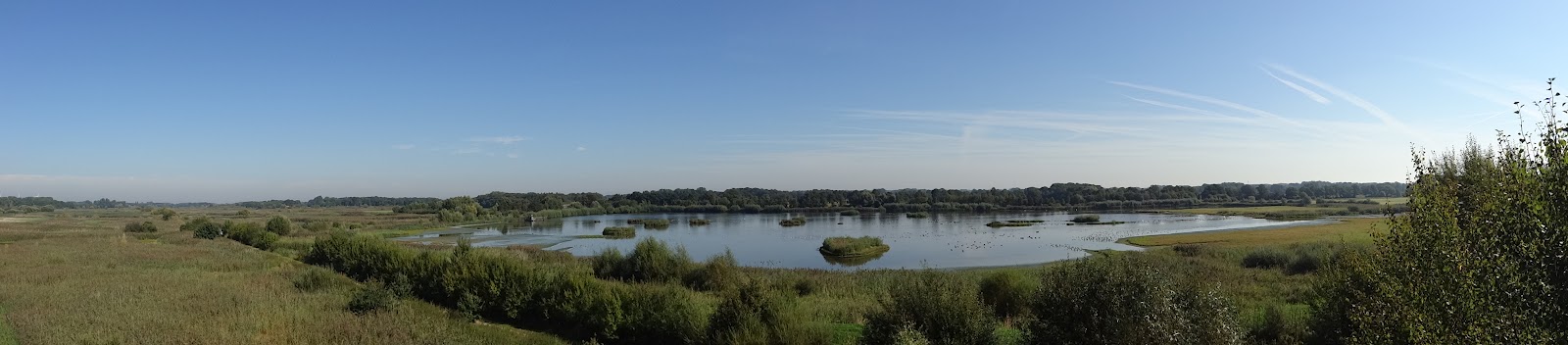
During the Geostat meeting (http://catherinepfeifer.blogspot.com/2012/09/is-there-such-thing-as-free-lunch.html), an excursion to the Rieselfelder area a meadow bird conservation area near Muenster was organized. It is one of these areas where human have accidentally shaped a landscape that turned out to conserve nature. A nice example of how unexpected rural areas developments shape the current European rural landscape. 
The major and regulation pond
Rieselfelder used to be shaped by sewage farming. Beginning of the century, the waste water of Muenster were directed to Rieselfelder, where the waste water was used to fertilize the land. As the city of Muenster grew, more and more waste water was directed to the area and farming became impossible in the middle of the century. Only in the late seventies the city of Muenster put an waste water plant into operation. In the meantime, waste water continued flowing into the abandoned Rieselfelder area. The waste water laid there and create small ponds full of mud and prevented tree and shrubs to grow. The openness of the landscape and also the nutritious mud attracted many meadow birds who found there the peace for breeding and abundant food, in a time where these types of landscape disappeared from the European map. 
A smaller pond
Today, after several attempt to transform the Rieselfelder area into an industrial zone, it finally became a nature conservation area under the European bird directive. It is formed of several ponds with rids where meadow bird find the safety and silence to breed. The recycled water from the waste water plant flows into the biggest pond, that also serves as a reservoir. During the summer, the water from the reservoir is used to fill the other small ponds making sure that the area stays wet enough. The decreasing level of water in the reservoir during this period results in a bigger muddy zones, which insures that the meadow bird find sufficient food during the breeding time. 
The regulation point of the major pond/reservoir
The whole area has also been well planned for recreation and attracts the city dwellers who less than 10 km from the town center find a place to relax, without disturbing the breeding meadow birds. Also the biological field station offers children program so that every child regardless of her/his background can discover nature. The biological field station also maintains the area with some employees and many volunteers and collect data about meadow birds. 


It is an interesting story showing that the lack of urban planning has created an environment that on other location has disappeared and has become today one of the crucial nodes in Europe for migrating birds : a multifunctional landscape worth a visit and some thoughts about the human nature interaction.
More info can be found under http://www.rieselfelder-muenster.de/
Our very engaged and passionate guide