Showing posts with label food sovereignty. Show all posts

Monday, June 5, 2017

Are smallholder farmers going to feed the world?

Monitoring and evaluation has become core business in the development sector, even for research. So for every project we have to come up with a theory of change. We need to explain to donors how our projects will influence our partners and how our partners will then influence other stakeholder to reach an impact on the ground.
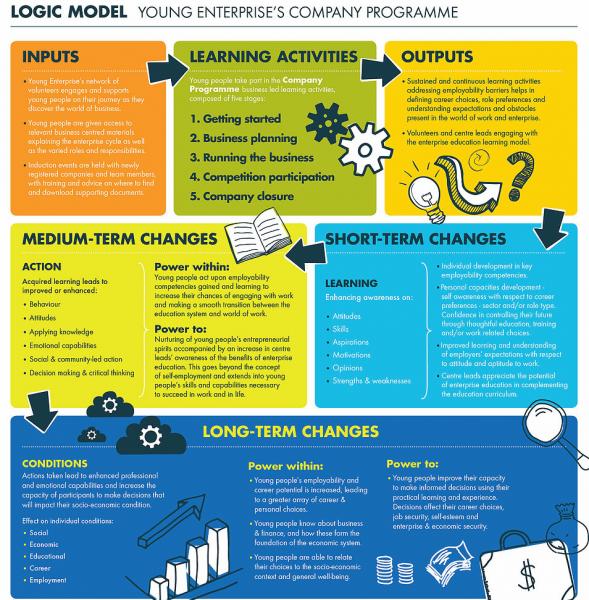

One of the story we often use tries to convince the donor that we will come up with new way to support smallholder farmer to commercialize. This means, we hope to contribute to the emergence of a smallholder farmer that will produce more food that for her/his own subsistence, and therefore will start selling food on the local market. Often we also hope that this smallholder farmer will invest the new revenue into better production means and therefore will become a more capitalized farmer, i.e. how has more equipment (for example a tractor or a milking machine). And after some years, our smallholder farmer will be a proud agri-entrepreneur contributing to African food security.
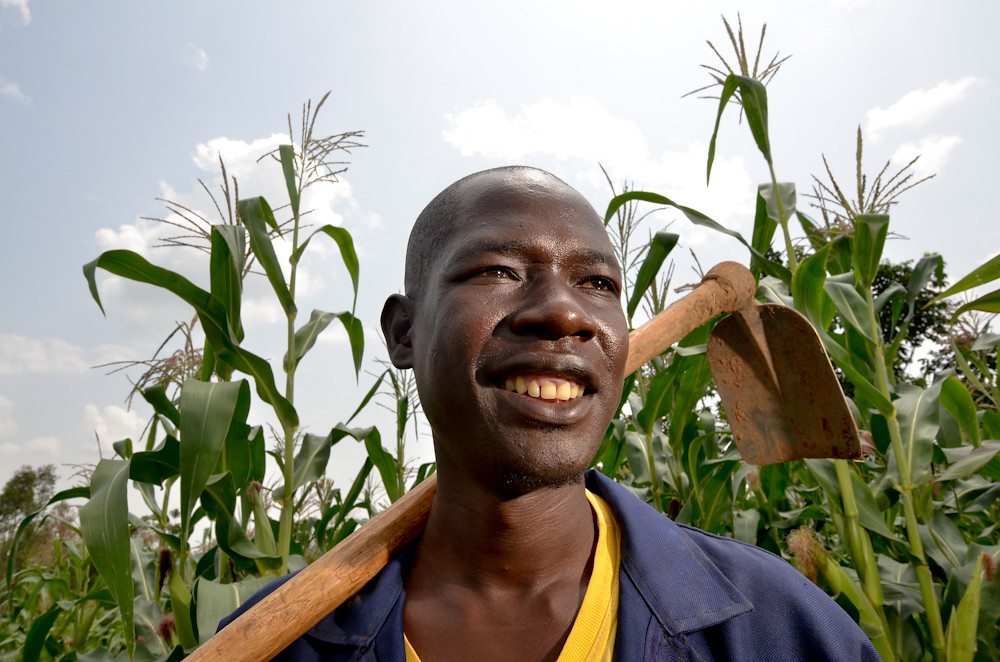
CIAT Kisumu 7


Nice story, and somehow is can sound convincing, isn't it. However when i look at the Kenyan context, i find it hard to believe, as most agri-businesses are actually started by young highly educated people with good incomes from other jobs... So where does my smallholder story fit this reality?
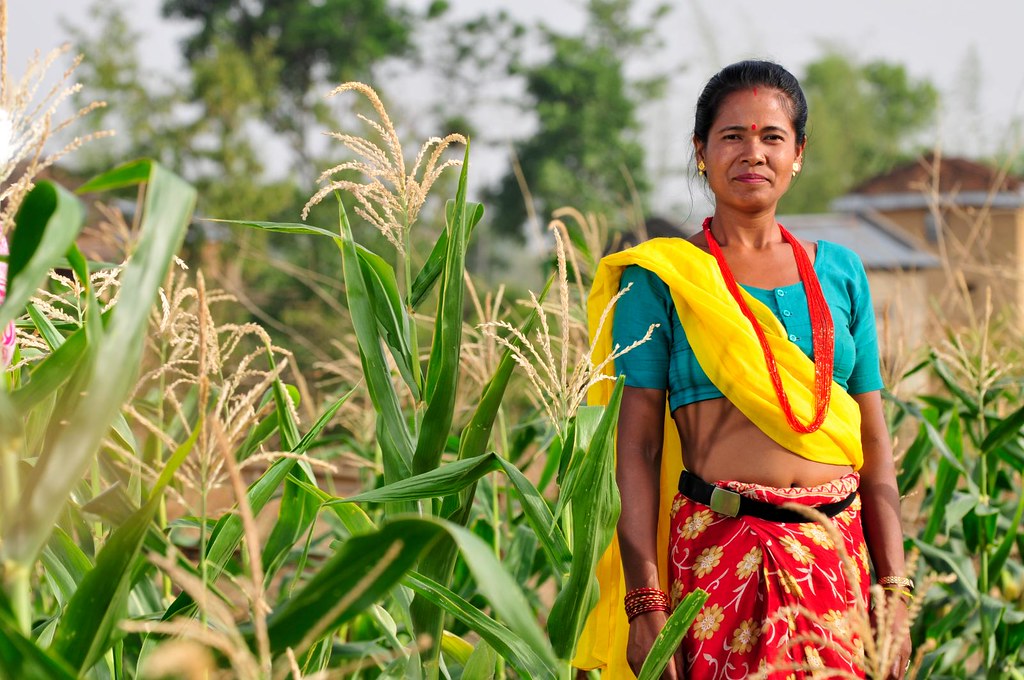
CCAFS Nepal-70 

 Some weeks ago, i joint a fascinating webinar, where Prof. Thomas Jayne investigates this question across different African countries. Only 5% of the medium scale farms are in fact smallholder that have commercialized, all other are or privileged rural population who by inheritance have relatively own big land or urban investors. Will this 5% be enough to justify our work in the up-coming years? or do we need to rethink what we truly want to focus on?

In the meantime a look at this fascinating presentation below  or check the website!


Friday, September 18, 2015

How will your life look like by 2050?

Recently i have been quite involved in doing foresight work, i.e understanding how we will be living in 2050. What will be the role of a smallholder? Where will food production take place? What environmental impacts will changes bring?


What i have learned over the last year analyzing data and traveling the developing world is that food production, and more particularly livestock keeping in not something rural, it is found all over including the high end areas of Nairobi. The biggest changes up to 2050 will be expected at the urban-rural fringe, where there is still space to produce at commercial or even industrial scales and where ways to reach the market both in terms of consumers and in terms of input (commercial feeds, veterinary services) in a short time.

Deepening myself into the topic, i found the shell new lenses on cities, showing how cities will change over the next decenies. They found 6 categories of cities around the world, offering us a new base to think about the urban-rural divide and its up coming developments : how will food be brought to people into each of these types of cities? what will be the role of agricultural production within the boundaries of these cities? And how will its suburb be organized?


A fascinating topic that hopefully we will take up soon. In the meantime get your own copy of the shell new lenses on cities here.

Tuesday, January 14, 2014

Meat Atlas : the global dimension about those animals we eat

Especially in the Western world, meat is seen as a bad. Indeed, livestock production accounts for about 18% of the greenhouse production, it requires more land and water to feed one person than on vegetarian diet.With the increased globablisation, impact of livestock production can be exported to poorer countries. A well known example is the cut rainforest in Brazil to grow soya that feds cows in the Netherlands.

The emerging economies (such as China or Brazil) have a growing middle class that demands more animal protein, and the trend of increased globalized negative impact will pressure on the environment, especially in the poorest country where short term economic benefits is weighted more than the environment.

But livestock is not only a curse in developing countries, it is also an opportunity. Livestock play a key role in many smallholder systems : they create manure used to fertilized fields, they bring in the healthy animal protein into very unhealthy diets of the poor, they act as bank, they are mean of traction. The benefits of making livestock smallholder systems more productive definitely overweight the negative aspects of livestock production. The latter is often forgotten in the debates in the Western world, missing out on an opportunity to think about how to support smallholders to improve their livelihood and diets.


This week, I came across the Meat Atlas, a report from friend of earth Europe, that presents all these globalized aspect of meat production in an easy but nice spatial way. Their aims is to  present a global perspective on the impacts of industrial meat and dairy production, and illustrates its increasingly devastating impact on society and the environment. The way we produce and consume meat and dairy needs a radical rethink. The cover a broad range of livestock related topic, focusing mainly on the industrialized meat production but also cover discussion about some small scale production in Africa. It aims at polarizing, so pushing forward the negative aspect of livestock and missing out the discussion of the positive aspect of livestock in developing countries. Nonetheless it is a nice presentation of existing statistic, and an eye opener to the troubling facts about what we eat.

So get your own copy here!

Tuesday, October 29, 2013

Do you know who the grand-father of the green revolution is?

Currently Dutch TV is showing a series that investigates where our food comes from, called Fresco's paradisLouise Fresco, professor at Amsterdam University and former director of reserach at FAO (and what a surprise a Phd from Wageningen), takes us into her paradis : "Food is our most intime way to interact with nature, because we in fact eat Nature. Handeling it in a carless way, wasting it or not knowing where it comes from, goes against any principle of a responsible life"

With this moto Louise takes us around the world, showing us how agriculture has emerged. In the first part of the series she visits the gene bank in Spitsbergen, and explains why agriculture could only develop thanks to dompting water in Turkey. (Watch it here)

In the second part, Louise takes us on the trip of the apple. I have been fascinated by the story on how the apple could reach Europe from the Middle East thanks to silk road. The horses on the silk roads where not only carries goods but also apple seeds, from the apples they were eating in the natural apple forests of Kazachstan. Apples very fast became a very good food items for Europe because it does not need any processing for being eaten and can be stored for a pretty long time. Intersting that today, apples are brough to the Ethiopian highlands to increase food security : the Silk road has been replaced research and extension service.
Also Louise introduces us to Nikolaj Vavilov (1887 –  1943), the Russian botanist who studied these apple forests and is considered as the first scientist who introduced the concept of genetical selection to improve crop productivity. This concept has been used to improve the crops in Asia, and therefore Nikolaj can be considered as the grand-father of the green revolution.

Watch this fascinating story here! 


And if you don't speak Dutch, then you need to be patient, it seems that the whole series will be available on DVD with English subtitles.

Sunday, October 20, 2013

About local farmers feeding the world and other stories from the air

Some months ago, i took a flight from Geneva to Nairobi via Amsterdam with KLM for a job interview. On my first flight, from Geneva to Amsterdam i got a traditional Dutch egg sandwich served. It is one of these very Dutch sandwich, soft dark bread with some strange egg mixture in it. You really need to be Dutch to love this stuff.

The sandwich box on the KLM flight from Geneva to Amsterdam

What impressed me most was the box in which the sandwich came in. It was full of information that triggered my thoughts. Next to a pretty classical recipe for bread baking (inside the box), it said, that the wheat was ground in a wind mill. Cool, it means this product contributes to the conservation of the traditional and authentic Dutch landscapes with windmills. I just noticed, that never the word traditional or authentic was mentioned and i wonder if there are modern wind mills and how they look like... I don't know (just probably like all the other passenger on this flight), but great that KLM is trying to support the Dutch landscape, which in the end will attract the tourists and help them to fill the planes.

But i was more astonished by the other side of the box, it says "local farmers feed the world"and "we produce our bread with respect for our planet". Up until today, i am wondering what that means. The Netherlands is the second biggest agricultural product exporter of the world, so de facto feeding the world. Also the Dutch agriculture is one of the most intensive ones, and sometimes pretty unsustainable and polluting. Nota bene, the sandwich was not labeled as organic, which would guarantee that this Dutch product has not been produced above the capacity of the land. And by the way the box talked only about the bread, what about the eggs? how many antibotics did the chicken get, and did they ever see the sky?

how do local Dutch farmers feed the world and produce in respect our planet?
I ended up with some really funny thoughts : did you ever meet a global farmer? what would that be? or is every farmer bound to his land and therefore local? And is not every farmer somehow feeding the world? And if feeding the world should suggest that food has been traded on a world market, then is KLM against the principle of food sovereignty? Can't be... it is just a sentence that does not make any sense to me... and i really wonder what all the other passengers were thinking while reading this. 

Anyway, it was this terribly early morning flight, I was on my way since 4 am. And even if my bread had been produced by global farmers to feed people on Mars, I just ate that sandwich : I was hungry and it has this incredible and unique taste of the Netherlands that recalled many very nice memories.

Finally, I landed in Amsterdam, happy as my stomach was full of sandwich and coffee and my mind full of nice memories. I stepped out of the plane and wished the flight attendant a "fijne dag verder en tot ziens" (have a good day and good bye). Upon which the flight attendant wished me "wel thuis" (have a save trip home).

I moved to the gate to board my flight to Nairobi, wondering what the flight attendant meant with "wel thuis".  I recently was offered to go back to ILRI (International Livestock Research Institute) as a GIS specialist to be based in Nairobi. I finally understood that the flight attendant meant : Nairobi will become my home soon. Going back to the "wild South", where everything is yet to happen, was too tempting, i could not refuse. Making sense of modern technologies and approaches and combining them with traditional local knowledge with the aim to support farmers to feed themselves and maybe the rest of world remains a fascinating challenge. Somehow I feel that i want to be part of this challenge and to its solutions, trying to make Nairobi my new home : a place where you can  enjoy the taste of samosas, definitely produced by local farmers for the local local market and a place where you will be welcome in a near future. 

eating a samosa at Java house in Nairobi

Saturday, September 21, 2013

Can we take back the power over our food chain? a reflection on food sovereignty

Food scandals are getting more and more frequent, the wrong meat in European lasagna, Chinese children dying of poisoned milk power. As a result, food sovereignty is becoming an emerging issue. Some month ago i received an interesting book, entitled food for thought, on food, power and human rights, by Gunnar Brulin and Malin Klingzell-Brulin, from a friend who interviewed the worker's unions.

It is a book that shows how the big companies have been taking over the power of our food chain, making us consumer powerless. We don't know anymore where the food comes from where and by whom it has been processed.

The authors of the book work for the Swedish food worker's union, and take the reader on a travel around the world, meeting those who produce the cheap food for us. From the Marabou (the famous Swedish sweets producer) precarious jobs (contract jobs only) in Sweden, to the coke drivers in the Phillipines with 12-15 working hours, passing through the shrimp production with child labor in Thailand, or the Ghanian producer suffering from dumping products. The book shows us how workers in the food industry have less and less power. This is pretty critical for our food chain, as theses people are the one responsible for the quality of our food. If we loose control over these jobs we loose control of the quality of food. But the book is not only negative, it also illustrates some small battles can be won, showing that a better food chain is possible, as for example with RSI victims working for Nestle in Brasil.

What i learned from this book is, that it is possible to take the power back of our food chain. "It is not easy to achieve sustainable production chains. It requires that the purchaser in the retail sector pay a reasonable price for food. Quality comes at a price. The different part of the chain need to be transparent and monitorable. It also requires that the workers themselves, via their trade unions can ensure that their working conditions are decent. Better jobs security means safer food. Government and other organization must be able to guarantee that production compiles with official standards and is environmentally sustainable." (taken from the conclusions of the book p 213).
"The right to food concerns everyone's right to a livelihood. The food shortage, hunger, is an issues for the UN and the ILO where nations, employers and trade unions can meet and make decisions that government promise to follow. It is crucial that there a jobs with a living wage. The trade unions member were have met are involved in food productions globally and locally. There doesn't need to be a conflict between these, if they compete on fair terms.  " (taken from the conclusion p. 220)

Next to enlightening stories and conclusions, the book has also a great appendix showing facts about our globalized food chain, from the seed and fertilizer company to the consumer, showing where the power truly is.

Sad that such a good book is so hardly accessible (you can order it from the union directly). If the Swedish workers' union were serious about transforming the food system, a first step would be to get his enlightening book to a wider public. Maybe it could be an idea to set it online for free? 

Monday, July 29, 2013

An initiative against food speculation

After my master studies, I was considered a bit as a looser, i was not going to a very prestigious university and was going to work on agriculture, while most of my friends studied fancy finances. Since then many things have changed. The financial crisis and climate crisis have resulted in higher and more volatile prices leading to more food insecurity, hunger and less food safety.

Today far from being a marginal topic, agriculture and its supply chains are getting more and more importance in our everyday life. Not only we see hunger has only reduced marginally despite of the millennium development report but also children die in China due to unsafe milk, lasagna has to be taken out of European market because the meat inside is not the one declared. Time has come to look in more detail into our food chain and try to understand what is happening, who has the power, why despite of our better knowledge and better technologies prices are still going up. Food speculation is one of the reasons. (See an older of my blog post on the topic here)


Food speculation has become a lucrative business, especially in these times where investing in other commodities, or real estate is difficult. But it is also the result of a food industry that is getting more and more centralized giving them more and more power. Time has come to put food and its chain into the political debate. The young socialists also share this opinion, and have started a popular initiative to for forbid food speculation in Switzerland. If you are Swiss, join me in signing this initiative, whether you agree with the initiative text or not, because it is time to start debating if food is a commodity or a right, and how we can take back to control over what we eat and how people work for our food. If you are not Swiss, keep an eye on a very interesting up-coming debate.