Showing posts with label Kenya. Show all posts

Thursday, March 22, 2018

Who is getting more milk and eggs in East Africa?

In the Western world, there is a strong trend towards veganism. In that debate, people often forget that small amount of animal sourced food such as milk, eggs or meat, can be the difference between a healthy and productive lives for children in poor families in the developing world.

This is why we are trying to understand what the links between the livestock sector and child nutrition are and try to quantify how much livestock ownership does contribute to improved child nutrition.
Preliminary result shows that owning a cattle or goat increases the chance by 8% for a child in a poor household and owning chicken increases the chance of egg consumption by 2%.


This is on-going research, and therefore some strange results are presented here and where discussed during this internal presentation. So keep posted about the up-coming improvements. 

Saturday, December 30, 2017

An end of year reflection : what can we learn from pastoralists?

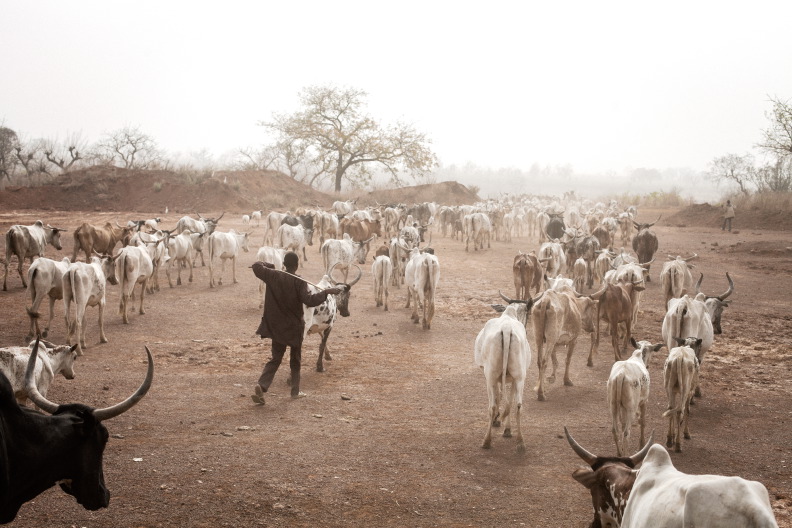
It has been a very busy end of the year, and i am just noticing that my blog remained silent for two moths and many of the interesting learning will only appear in 2018. But as the end of the the year approaches, it is time to reflect about 2017 first. It was a year that took me to Burkina Faso and Ethiopia twice for the CLEANED project that aims to assess environmental trade-off of intensifying livestock value chains in developing countries, to Somaliland where i have been setting up a GIS lab and working with the local government on the livestock sector, and to Northern Kenya.


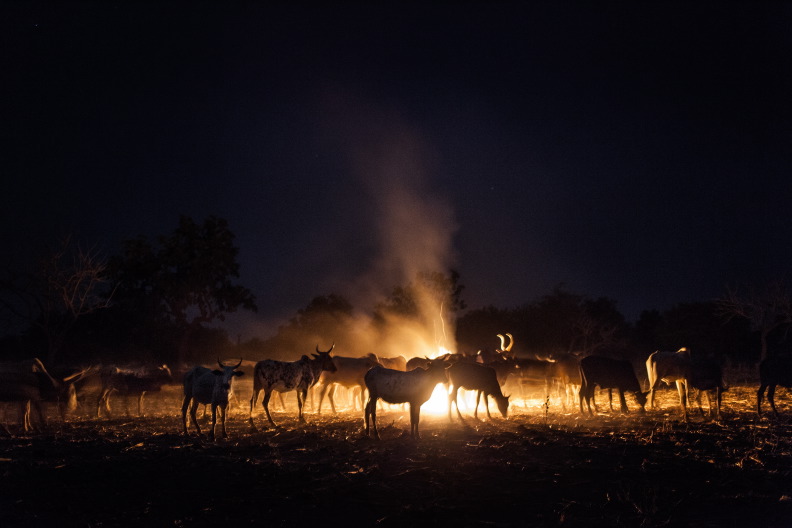
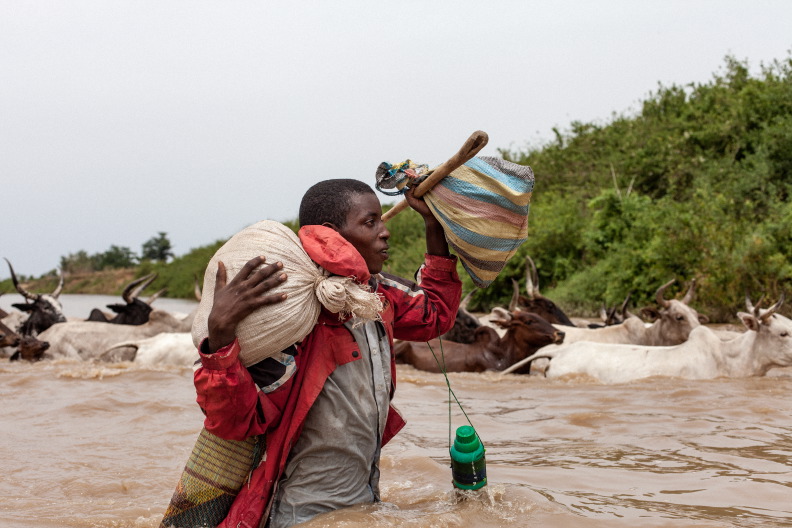
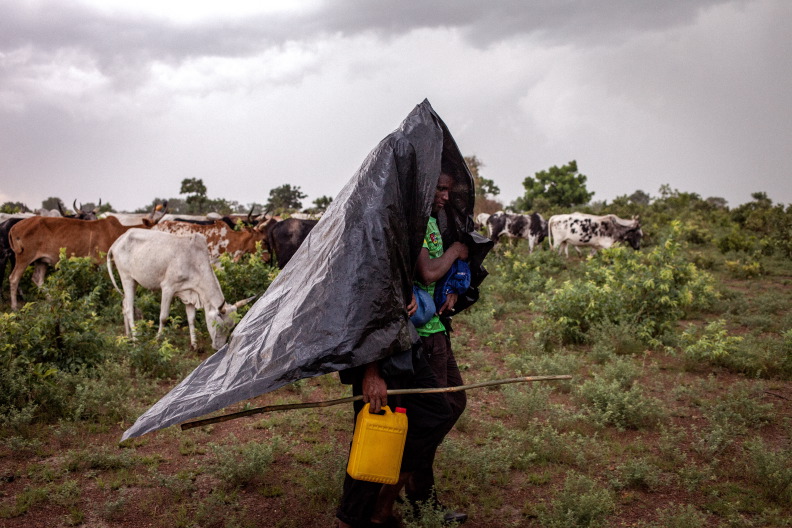
So what did 2017 bring? for me it was the year where I engaged with pastoralists across Africa, in Burkina Faso, Somaliland and Kenya and discovered a fascinating world, where all the logic I know about was challenged.


Pastoralists have a very different way to see the world than the smallholders farmers I usually work with. And it might sound stupid, but because pastoralists are moving with their animals in very harsh environment, they are not really interested in accumulating "stuff" that is heavy to carry around and they are used to live with almost nothing. This is why many of the incentives that we usually use, such as money or in kind just do not work.


Pastoralists value their community and their animals. Therefore, working on the relationship with these communities and build up trust is the better incentive than some materialist item. Also, I have discovered that pastoralists have their own information sharing mechanism that they have developed and improved over centuries and nobody is waiting for any phone app to bring a revolution, they have the information they need. Also information is shared within relevant networks within clans, and there are good reasons why that information is not public : governments do not know how many pastoralists are crossing boarders (a concept that is nonexistent to many pastoralists) and therefore cannot tax animals going from one country to the next, others clans who might compete on ressource might not yet know where the good pastures are. So bringing digital products to this world might do more harm than good, and a better understanding of what information can be shared with whom is necessary before thinking of digital products.


Across all countries, pastoralism is under pressure. There is often conflict on land among pastoralist clans themselves, as in many places the number of livestock is above the carrying capacity of the land which has led to serious land degradation and a resulting lack of available feed and fodder. Also there are conflicts between pastoralist and crop farmers, on who has the right to use the land. Pastoralism is often seen as an old-fashioned lifestyle that is doomed. But especially, in Western Africa there is a strong movement to fight for the right for such a traditional lifestyle.


Meeting pastoralists and working with anthropologists this year have changed the way i look at agricultural intensification in Sub-Saharan Africa. Clearly, there is an urgent need to increase food production in Africa where population will double over the next 30 years. High potential area, where rain is abundant and soils are fertile, will have to play a big role in producing more food, also smallholder farmers in those area are keen intensifying there production that they believe will bring more income. But, in dry low potential areas it is less clear what intensification of production can bring, and people making use of these area have a right to choose their lifestyle, even if it goes against the mainstream thinking. Who are we to push pastoralists towards something they do not believe in for the sake of feeding the world?


Clearly, in the transition zone, between the high potential area and dry rangeland, conflict between the two world emerges. In those zones, land use planning and clear rules that regulate fair access to land and its biomass need to be implemented so that both pastoralists and non-pastoralist can co-habitate. Combined with efforts of land rehabilitation, and emerging opportunities outside of the agricultural sector that can offer jobs to those who do not want to remain a pastoralist, might support a productive and sustainable  traditional pastoral production that sustains a decent livelihood for those who choose to live in this way.


As we move to 2018, let's keep an open mind to those who go through life differently and learn to appreciate what they can teach us, the same way pastoralists have reshaped my understanding of agricultural intensification this year. I remain with thanking you for following this blog, that in the meanwhile has up to 2500 clicks a month, and wish you a happy new year!


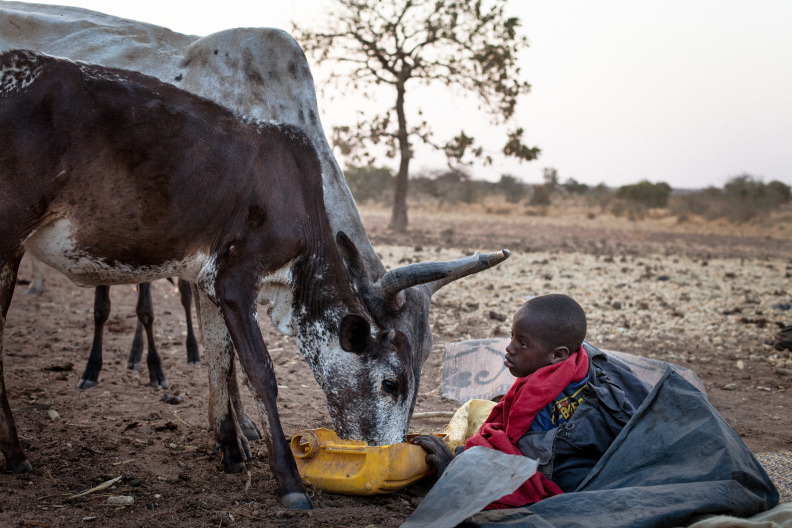
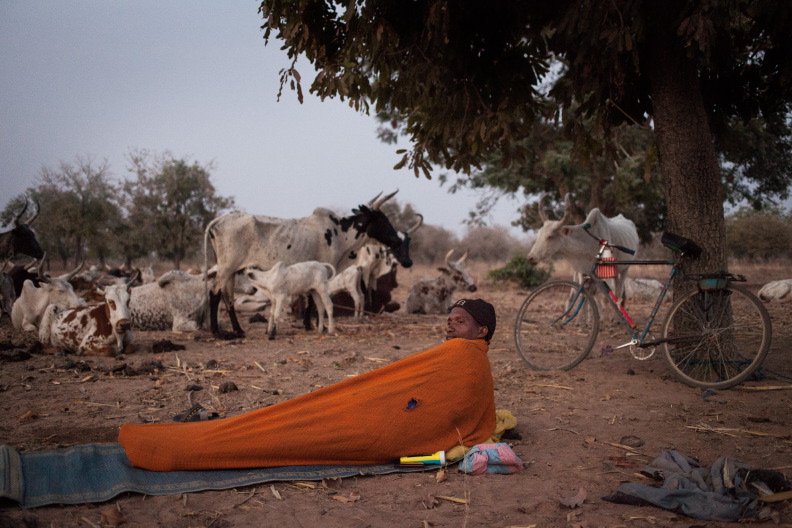
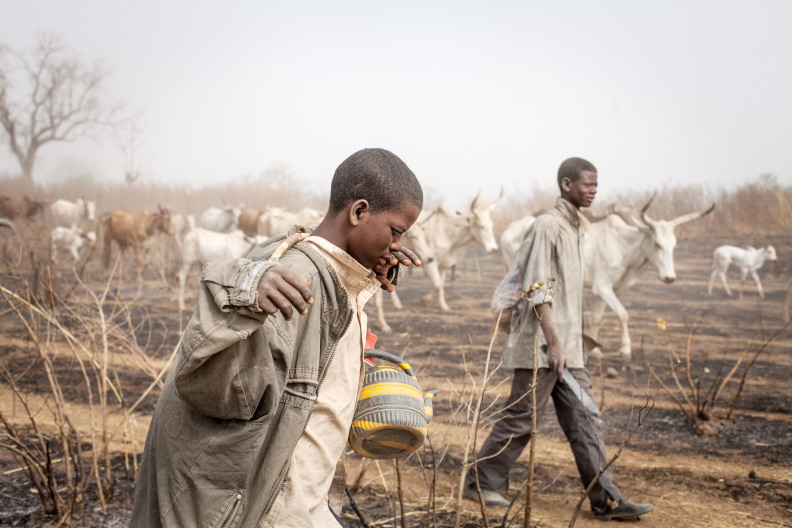
Note that all pictures in this post are taken from here. They are made Gille Coulon, an award winning photographer. He has exhibited these pictures at the "centre culturel francais" in Ouagadougou, an exhibition that was lucky to see during one of my many visits in Burkina Faso.

Monday, February 27, 2017

Making the data revolution work in Kenya

Last week, i was invited by technoserve, an NGO looking at business solutions to end poverty, to join a meeting bringing together GIS (Geographical Information Systems) experts in Kenya from a whole range of organizations, including private sector, NGOs, government representatives, governmental organization and research both national through university of Nairobi and international (well myself and my technician).

The aim of the meeting was to support technoserve to understand better how the sector currently looks like. We discussed many bottleneck in the current systems, trying to understand how comes that so many technologies are available in location based services, and yet so little is in use. Through group discussions we found out several issues that are characterizing the Kenyan context, among  which :
  • policy and regulation are not in favor in new technologies (until last week for example Kenya had no legislation about commercial drones, and it was almost impossible to fly drones) 
  • there is a lack of awareness across all organizations and levels, mainly in the Kenyan government, which explains the lack of policies.
  • There is lack of well trained staff that can take up the challenge of new technologies
  • There is no lobby group for GIS and new technologies in Kenya (true, and this meeting was great to meet a lot of new people) 
  • There are almost no opportunities locally to keep oneself up-to-date in this fast moving world. 
group work during the workshop
What i learned from it? My work at ILRI today has nothing to do with the work i did some 3 years ago. We have moved from a data scares world into a world there data in abundance, but we do not know how to learn from it. We have moved from a static world to a very dynamic one, as new data comes in our maps have to up-date and send relevant and understandable information to decision makers. Concept of near real time, machine learning and big data are changing our jobs... it is a really exiting world... but only few of the organizations present at the meeting were aware of the on-going data revolution...
David Galaty, the project manager of innovation in outcome measurements

The project that brought us together is called innovation in outcome measurement, and aims at understanding why some technologies are available but its potential is not used... good question and guess what? was raised by Gates Foundation, that funds the overall project. Beyond this meeting, the project foresees to test the use of drones in the livestock sector, a sector that is more complex than crop (which don't move) and for which drones have hardly been used up until now. What can drone change? which livestock related businesses can it enhance? what new insights can we gain? I will hopefully be part of the team that will try to answers these questions and see how to combine data from drones with other sources to gain new insights in the livestock sector.

example of drone used for aerial photography
Once again, Gates foundation is just making it happen : giving me indirectly the opportunity to challenge the status co, push me out of my comfort zone and giving me a  space for radical re-thinking. I am exited and looking forward to take this challenge up along with technoserve.

Friday, August 28, 2015

What is a farmer?

In my recent trip to Kisumu, I joint a focus group discussion with farmers to discover how they see their future. We had two questions we had asked farmers individually :
  •  How will your livelihood strategy change?
a participant weighting her future livelihood strategy
    1. off farm activities
    2. farm diversification (new farm produce)
    3. commercialization of existing farm produce
    4. increasing farm size 
  • How do you think will you income be composed ?
    1. cultivation of food
    2. cultivation of non-food
    3. manufacture
    4. trade
    5. livestock
What stroke me in this discussion is that non of the farmer has put any weight to off-farm activities. All farmer intend to remain in agriculture, despite of the fact that many of them are already dependent on off farm income, for example by driving motorbikes. Also when one asks them about future income, few think it will be coming from food and feed productions, but from trade.

I was very puzzled about this result, as most of these farmers are cultivating on less than an acre of land and the proximity to Kisumu town offers plenty of off farm opportunities. My first explanation of this phenomenon is a self-selection process : those people who bet on off farm activities have probably already left, and therefore did not participate in our focus group discussion. But in a second stage, I turned to Irene, my colleague who is organizing these focus group discussion brilliantly and who very obviously has a full time job with ICRAF in Kisumu, and asked her : so are you farming? she said yes.
Irene, the farmer?
How? she is working full time just the same way i do in Nairobi... So i dug further, and i discovered that she and her family owns land, relatively far away from Kisumu, but she is investing on this farm, as she can afford buying agricultural inputs and therefore makes the critical decisions on the farm. However, she is not doing the farming there, she has family member to do it. So she is basically a phone farmer.

It was a great discussion through which i understood the very strong linkage that Kenyan have with their land. As long as one own or cultivate a square meter of greens, one will declare oneself as a farmer. So no wonder non of our participants will ever step out of agriculture, they will take up jobs in town and run their cultivation of 1/8 of an acre before going to work and when coming home and still be proud farmers.
a phone farmer?
I reminds me of my PhD time in Wageningen, I also owned a garden, where I was cultivating my own food. However, i never felt like a farmer, i would have refereed to myself as a happy gardener. Also recently i started to plant salads and courgette on my very small balcony in Nairobi, I wonder if under Kenyan definition i am a farmer too?

Let go back to our farmer Irene, she is working for agricultural research, probably earning a decent wage, and building up a network in town that will allow her to get good market access. I would not be astonished if in a few years she would decide to invest her money to make her land a commercial production bringing high value products to market and hire people to do this for her. For example, she could invest in a well and then cultivate berries, or go for intensive livestock keeping.

a junior farmer?
So when we are talking of smallholder farmers who are we talking about? are we scientists asking the right questions? are we able to differentiate between farmers like Irene and the smallholder farmer relying on his land only? Do we still talk of farmers when someone has a full time off farm job and is cultivating her/his own food? When we talk about commercialization, which farmer are we talking about? Where are the decisions about agriculture taken? And if we talk about the smallholder revolution, do we really want to focus on the poor smallholders relying fully on their land with a lack of capital and knowledge? or shouldn't we focus on farmers like Irene who have the knowledge, the capacity and the capital to commercialize and potentially offer employment to smallholders in the surroundings in a less favorable situation?

So what's your definition of a farmer?

Friday, August 14, 2015

How do smallholders see their future?

I am just back from Kisumu, the Kenyan town on the shores of Lake Victoria. For research program Humidtropics, I joind my colleagues to join a focus group discussion with farmers in Kisumu county, in Nyanza village.

In collaboration with ICRAF, the world agro-forestry center, we want to understand aspiration of smallholder farmers better and link their vision to more global scenarios.


We met a quite homogeneous community, or at least a selection of that community. Whereas women first mentioned health and men infrastructure as major improvement, both came up with improved agriculture as second.

I mostly followed the women's group who had ranked water management, market access,  better agricultural practices as priorities to work on.


Next to a focus group discussion investigating the community vision, we also asked farmers about their personal aspiration given their own context. 

Most farmers would like to improve their livelihood though agricultural diversification and commercialization. Some of them also wanted to expand their farm. This sounds very unlikely to me, as population growth in still high and about 1/3 of the participant were already farming on 1/4 of an acre. I was then told that communities nearer to the lake focus more on fish and therefore neglect the land, and it might be possible to rent land there and commute for farming.


They see that new technologies, crops and breeds can help them to be more profitable, but they cannot go for industrial production because they lack in capital nor they can access it. This became very obvious in the male group, with discussion about improved local chicken which they all wanted to have, but not the industrial exotic breed (broiler). No one came up with the strategy to increase off farm activities.

However, if we ask them by 2025 where will your income come from, many of them have actually indicated that will depend more on off farm income, mainly coming from trade of agricultural products rather than just selling the product to an trader.


From the smallholders' perspective there is a clear space for smallholders in food production in the next 10 years. They will diversify their production, intensify where they can and jointly access markets for better prices. I am looking forward to try to link their vision to different scenarios and investigate how smallholders livelihood will change...


Sunday, May 17, 2015

When real estate companies discover agriculture

It is with great intersted i read the "seeds of gold" the agricultural supplement of the Kenyan daily nation yesterday. It is about HessConsultant, a real estate company i came accross when i was looking into buying a flat in Nairobi. To my big astonishment, they where not building houses, but building gated farms, like gated communities in Nairobi (set of townhouses that share security).
A gated farms shares security, water access and professional advice. A very interesting new concept for commercial farming in Kenya, providing 25 four acre plots, these are sizes where lots can be done and is commercially viable.

Gated farms
The owners of the plots have all their different business plans from horticulture to livestock and are very confident. What is missing in this discussions is the synergies that theses 25 farms could have by working together, for example the poultry farm providing input to the dairy farm with the poultry excrement, or the crop residues to livestock.
Where as the concept as presented is a classical commercial agriculture model relying on outside inputs, it might be worth to look at how these different farms could complement each other to produce commercially in a closed and sustainable system. An opportunity that these farmers should not miss, and an initiative that i will hopefully visit one day, when it will be fully set up!

Find here the full article.

Friday, March 13, 2015

Nairobi, an urban zoo? or the limits of agricultural census data

In my last post I have shown a livestock keeper in urban area. Urban agriculture is often not so widely studied, as most agricultural census data are restricted to rural area. The lack of standardized big amount of data makes it very difficult to understand the different food producing systems along the urban rural continuum.

The recently released demographic health surveys (DHS) are bringing a big change in the data availability. Because they focus on health, they cover the whole continuum from urban to rural. As they are also interested in wealth of the households, they collect lots of information about assets,  including livestock and agricultural land.

As part of the Urban Zoo project to which ILRI contributes, i have been asked to study livestock ownership within the boarders of Nairobi based on this data, with some astonishing results.

About 60% of households in poorer neighborhoods of Nairobi own livestock
The most common animal is chicken

but also dairy cow
So missing urban areas out of agricultural survey will always result in missing livestock keepers who contribute to food security.

Tuesday, August 26, 2014

Is social entrepreneurship a model for agri-business?

No later than yesterday night i had a long debate with the co-founder of Jolly Poultry about what social entrepreneurship is, and what it would mean for an agri-business like us to be a social entrepreneur.

Are we supporting the poor to produce poultry? to consume poultry? what has potential to scale? Where is the entry point? and how do we disrupt the existing system to leverage the poor, the young people and women?

So i found today this video, showing what a social enterprise is :


The video does not say much about farming and agri-business : there are still plenty of opportunities! What do you think are criteria for making our poultry agri-business a social enterprise?

Friday, August 15, 2014

When tomatoes become a luxuary ...

Over the last month, my budget for vegetables suddenly exploded... price in Nairobi for fresh food just dramatically went up, especially tomatoes doubled since i am here (ok there is also a seasonal effect in this price change)... The canteen everyday just serves cabbages as if another vegetable had disappeared from the market... I got so tired...


But I belong to the lucky people who can afford to enter a shop an by more expensive vegetables, even tomatoes. However, this significant price increase is fueling inflation in Kenya, making life for poor people even more difficult.


See the recent article about how food prices are changing the daily life of poor people in Kenya.
http://www.standardmedia.co.ke/business/article/2000131015/why-most-households-are-dropping-tomatoes-off-their-menu

If you eat some fresh vegetable of your choice today, remind all those people who probably struggle to just get some sukuma wiki (local cheap cabbage).

Kenya: Phillip Abuya has seen a drastic change in his diet, thanks to soaring tomato prices, in a complex phenomenon that has altered the meal composition for millions of other households across Kenya. Tomatoes have fallen off his shopping list, and have been readily replaced by processed flavouring additives such as Royco and tomato paste. Traditionally considered an essential ingredient in cooking across the country, Abuya says he cannot afford to buy tomatoes at the current prices that are as high as Sh17 apiece. Corner shops in some residential estates are selling three large tomatoes for Sh50, and Sh10 for a medium-sized one. “I have to make do with the artificial additives when I cook,” said the 27-year-old accounting graduate who is yet to find a job. A typical meal he prepares consists of ugali and sukuma wiki. His situation is replicated in most households, especially across Nairobi, at least according to Jeremiah Njeru, who operates a grocery store in Buru Buru.
Read more at: http://www.standardmedia.co.ke/business/article/2000131015/why-most-households-are-dropping-tomatoes-off-their-menu?pageNo=1

Tuesday, August 5, 2014

Engaging young people and women in commercially viable agriculture : a mission impossible?

In the developing world more than 50% of the population are young people (below 30 years). Many of them have a great struggle to find jobs, and entrepreneurship is often seen as one option to reduce youth unemployment. But youth entrepreneurship in not just a magic bullet. Some young people are just not the entrepreneur type, and for those who are access to capital to get a start-up going is pretty difficult.Often, the western world thinks that micro-credit can be a good option for young people to start off a business. Unfortunately, nowadays micro credits with amount between 100 -1000 USD are just not enough to get something going. More high risk capital should be made available, something the Kenyan goverment in looking into right now.

Here is an Aljazeera report that looks into these issues, and interviews some of the most innovative young people in Kenya.


It turns out that i know some of these young people and know about their struggle to get start up capital. The Kenyan government low interest governmental loans for young people gives some hope. However, no one really believes that the Kenyan government will really give out sufficient loans and on merit base.

Making commercially viable agriculture accessible to young people is an interesting option for youth entrepreneurship that Aljazeera does not mention. Jolly Poultry, the chicken farm that i have recently started up, is now looking into getting more young people in poultry farming. Poultry farming is a relative low entry business, meaning in amount of money needed to start up is relatively low. Especially in livestock there are good margins. Jolly Poultry does now offer training to young people and offers them a space to think about their own farm, to choose the right infrastructure, make the right choices fitting their personal situation and needs.

We hope in this way to open the door to poultry farming for some young people and give them are more interesting perspective of life in the Kenyan agricultural sector..


Thursday, June 26, 2014

Multifunctional farms, in rich countries only?

Lately, I went to visit a poultry farm a bit off Nairobi, to get inspired for my and my friend's poultry project. It was an impressive poultry farm, that was producing improved local chicken, quails, Guinea fowl, parrots, ducks and many others. Next to the amazingly spacious cages fulls of birds, the farm has also an impressive breeding space, with huge incubators and cages to keep chicks warm. An impressive farm, optimizing poultry production.

Guinea fowl
Next to the meat and egg business, the farm sells chicks and fertilized eggs from all the birds they have. What i really learned from them, is that consistency is key to Kenyan market (i.e. being able to always supply). As they cannot consistently sell Guinea fowl meat, they prefer to not sell, but wait until they can reach consistency before entering market : a smart way to not loose the market before one has penetrated it.
A just born chicken, still in the incubator
But what impressed me most about Ben, the farmer/owner of the farm was his vision of a multifunctional farm, just like those amazing farm i was visiting in the Netherlands during my PhD. He is dreaming of a farm where every day school classes are coming to learn about farming. And he already host regularly hosts classes. He wants to show young people that farming is not a second choice in life, it can be a very smart and good business.

one of the several incubators
But he has even bigger dreams, he hopes to have a small conference center and a camping so that people from Nairobi can enjoy not only his good meat but also the tremendously nice landscape he is living in and he co-creates.

The tremendously nice landscape just some kilometer away from Nairobi

Ben reminded me a lot of Jan Huijgen, the farmer who took up the initiative to get some funding to fund my PhD : a man with the vision to reconnect cities to their food. And as i have just learned, this is not just a European vision, it is also emerging in Africa...

Jan Huijgen
 Wanna make your own intercontinental comparison? Find here Jan's blog


Tuesday, June 17, 2014

Let's walk the talk ! Bringing Kuroiler chicken to the Kenyan market

Recently I have reported from a new chicken breed, Kuroiler,  that can potentially boost the whole Kenyan poultry sector!

Not later as yesterday, KARI the agricultural extension service from Kenya, announced that they are overwhelmed with the demand for improved local chicken, also know as KARI kinyeji chicken. No order will be taken until February.


A friend and myself, have decided to walk the talk and have just invested in an incubator, and in two weeks from now we will be able to supply the market with Kuroiler chicks, the improved local chicken from Uganda, which we believe has even better features than the KARI breed. We hope to reach consistency of supply within the next two months, implying that we will be able to provide the market with about 1000 chicks weekly.

So check out new blog/website and help us to spread the word!


Friday, June 13, 2014

Making geo-information available for smallholders through business

Yesterday, I was invited to Safari park Hotel for a match making event on how to use Geo-information, mainly from satellite images for business purpose in Africa and reach out to the farmers. The meeting brought together NGOs, insurances, banks, farmers' organization, mobile payment companies or research institutions. It was organized by Dutch space office and agri-pro focus.


The meeting will followed by a call for implementing projects in selected countries that will allow to link-up the last mile, i.e. bring the Geo-information to the smallholders in the form of a business idea.

The call will contain some hard core criteria, such as having a Dutch partner, having private sector partners (i.e. having a business model) or using satellite images. However, there are a bunch of other outcome criterias, such as how many smallholders need to reach out is yet unclear. A dialogue between donor and partners has started to come up with smart indicators, and hopefully will be flexible and part of a negotiation.You can find more information about the up-coming call here.

ILRI (International Livestock Research Institute) was prominent guest, I was proud to represent and to present in the plenary session. We have been widely recognized for our work on the index based livestock insurances (IBLI).


The insurance uses satellite images to derive NDVI (normalized difference vegetation index) and livestock mortality data to create an index. When the index indicates a drought, payments are done to pastoralists regardless the livestock has died or not.

First informal discussion took place with some of the partners to enhance the efficiency and the reach out of the insurance. There is definitely scope to follow-up.


Monday, May 5, 2014

The magic chicken or how Kuroilers are about to boost the Kenyan poultry sector

(please check Jolly Poultry if you are interested in getting your own Kuroilers) 
Chicken farming has always been an interesting option for smallholders in Africa to raise some cash and contribute to increase availability of proteins in relatively poor diets. Indeed raising chicken does not take much resources as they can be fed on agricultural waste and therefore barriers to entry are low. Smallholders usually grow endogenous breeds that are very well adapted to local conditions and are resistant to diseases, but productivity is very low. However, locals, both in Kenya and Ethiopia are ready to pay more for local chicken meat, at it seems to taste much better than commercial chicken. (Honestly, the only time i ate endogenous chicken, it was so hard that i almost could not finish it. In Swiss German we call this a "gum eagle" but somehow consumers here prefer it.)


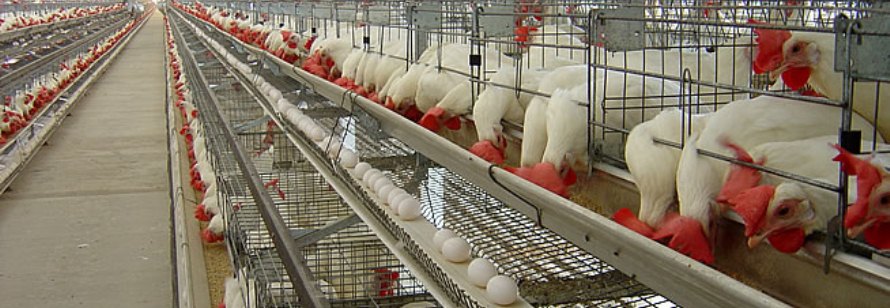
Over the last years, intensive poultry farming has increasingly been taking over the African market. Commercial farming uses improved breeds, namely broilers for meat and layers for the eggs. These improved breeds are very productive. Maturity of a broiler is reached at 5 months and can weigh double than an fully grown endogenous chicken that takes up to 10 months to reach maturity. Also commercial layers can reach up to 300 eggs a year compared with 50 for endogenous chicken. However, these improved breeds are often not an option for smallholders. They need relatively expensive feed, they cannot be fed just on leftovers. They also are very sensitive to illnesses and therefore need expensive medication and vet. Also, they do not match the dual needs (i.e. a chicken for meat and eggs) of smallholders. 
Commercial farming in Kenya (taken from here)
To address the need of smallholders, an improved endogenous chicken, referred to as Kuroiler, has been developed in India, and has recently been introduced at large scale in Uganda. It has the benefits of a endogenous chicken, i.e. illness resistance, ease of feed through agricultural waste, and is dual purpose.  Yet Kuroilers have a much bigger productivity than endogenous chicken, namely give 150 eggs year and can reach 3.5 kg (compared to 2.5 kg of an endogenous chicken) in 6 months (compared to 10 month with endogenous chicken). The only thing i don't know is about the taste. Will it have this funny consistency that Kenyans love so much?
3 weeks Kuroiler chicks
It sounds like a pretty magic chicken that might save Africa :-)! The only turn down of this breed is that it needs vaccines and devorming, but both of them are quite affordable. Also it is smart to feed them on high proteins, i.e. on special chicken feed during the first 3 weeks.
Counting the new arrival of 1 day kuroiler chicks from Uganda
Now you are probably wondering how to get Ugandan chicken in Kenya? My friend went to Uganda to get her starting stock and she will be hatching them herself in the up-coming months. Chicks are sold at 3 weeks. Contact me or her (via the form below) to know when the next batch is ready and to make a reservation so that you can get yours soon!


foxyform
or check this website

Thursday, May 1, 2014

Lake Baringo : a look on an fish chain

For Easter I discovered lake Baringo and Bogoria, North of Nairobi and the one of the probably pretty underdeveloped fish chains of Kenya.


Lake Baringo is pretty touristic also thanks to its beautiful natural, however due to heavy rain the lake had more water and some of the nice logdes are now standing underwater.


When we stepped into the boat, there were plenty of fish fingerling, and fishermen brought in plenty of quite big mud and cat fish. It seems to be a very healthy lake, and overfishing does not seem a problem.
children fishing
Fisherman, fish on small boats made of very light wood, they look pretty like the ones you can see on Tana lake in Ethiopia.

Then when the fish is brought to land, if is first cut and sun dried for a bit, then it is fried and smoked.
the cut fish : sun drying
smoking the fish
The processing of the fish is mainly a women's work. Maybe that's also why this chain is pretty underdeveloped. Fish leaves the place dried or fried and reaches Nakuru the nearest town but not Nairobi. I am personally not fond of this smoked fried fish, but my Kenyan friends really love it. The processing allows to transport fish without a cold chain, and therefore the fish could reach Nairobi though, the place is 6 hours away. Clearly, campi ya samaki (fish camp) is a place, where if some thoughts are put in, markets could be unlocked to benefit women, who today don't make the money their high value product would be worth...

Thursday, April 17, 2014

You're welcome : or why you should thank Africa?

For the Easter week end I would like to share with you a very funny TED talk. He is mapping innovation in the world. He takes the light map of the world  : "All the places with lots of electricity, it isn't (where innovation happens). And the reason it isn't is because everybody's watching television or playing Angry Birds".


Toby Shapshak, is explaining which african technologies have changed the world and probably your life. Enjoy the talk!

Friday, April 11, 2014

Shamba shape-up : or how to make farming a cool business

In the strive to get smart dissemination channels to reach out smallholder farmers, the CGIAR along with many other partners set up a TV show, named shamba shape-up (in swahili shamba means farm), that gives agricultural advise from experts, including the results from research done in my institute.


The shows contain useful information to improve agricultural productivity for example about how to cope with climate change, how to bread and benefit from livestock, about new products on market like insurances or new or improved crops. The program is made in Swahili and in English and is shown on Citizen TV, a TV station that reaches out to all urban and rural Kenyan, as well as to Uganda and Tanzania. After the show, if you live in Kenya, you can send an sms to 30606 with your name and postal address, and then a leaflet summarizing the TV show with the essential contacts will be sent to you for free. You can also download the leaflet from the website or follow on Facebook, on Twitter or by subscribing by mail. A pretty cool way to reach out to many smallholder farmers, offering them different channels to access information.

Here is one episode :


Thanks to the order of leaflet with sms, Shamba shape-up has a wide collection of phone numbers of farmers, who disclosed themselves as being interested to improve their farm. Shamba shape-up could therefore be a very interesting partner to spread relevant information as well as provide database of potentially contributing farmers for crowed-sourcing, i.e. farmers who could share information about their farms with us.

In all cases, it is an interesting source of information, not only for smallholder farmers in Kenya, but for all of you who are interested about what real rural Kenyan problems are. It might also be an eye-opener for those of you who still believe that these people are still waiting for your second hand clothes :-) .

So check it out here! 


Monday, March 17, 2014

Icow : how the kenyan mobile revolution also contributes to agricultural developement

M-pesa, the mobile payment system invented by Safaricom already years ago, allows to send money by mobile phone. It has revolutionized how people make transfers, in particular for women with micro credits. With m-pesa, they can directly reimburse their credit as they earn money, they don't need to keep it in the house until the payment day and in this way they avoid that their husbands use the money for something else (drinking)...


The developed world, that did not know about this technologies until recently, is now realizing that Africa has developed its own solutions and every day is pushing them further, as the above extract from the Swiss news shows.
The latest Kenyan mobile phone innovation is icow, a system that sends you weekly tricks and tips about dairy farming. It also allows you to register your cow and get personalized information such as reminder about which cow needs to vaccinates. Finally it also allows you to get the phone number of your nearest vet.

A pretty cool mobile phone solution that does not even need a smartphone... maybe one could use this information for crowd sourcing? 

Monday, March 10, 2014

Get the crowd to save the world! and a reflection on crowd-sourcing in the developing world

I recently discovered that one of my task in my job was to get the geo-wiki for livestock working. A geo-wiki is a platform that allows crowd-sourcing your map. Crowd-sourcing? It means asking people out there to validate your map.
To validate the global land use map, Steffen from IIASA and his team have developed a game, named cropland capture, that shows satellite images and photos to the player who must decide if he sees cropland or not. Land-use maps are usually based on satellite images and use an algorithm to decide what the land use is. So there is always a pretty high chance of an error. Verifying a global land use map is mission impossible for one person, but if the whole world contribute we might get a pretty accurate map quite fast! The game has been a big success, a big parts of the world could be validated.


I had my big doubt about how crowd sourcing could be an option for the developing world. Most of the areas i worked it in Ethiopia had no mobile phone network, so no internet, no electricity so no option to recharge a phone, and a smartphone was an item for the fancy high society. However Kenya is different, it is the place where m-pesa, payment via sms has been invented (a functionality that is yet to be implemented for the Swiss mobile phone networks). Many people have mobile phone coverage, and Safari.com the leading local telecom provider is providing the already very famous (at least for those who know me) Huawei smart phone that gives you the whole android functionality for about 60 usd. So the problem of crowd-sourcing in Kenya is not a technological one, but a motivational one : how can we convince farmers to log on an app and pay for the internet connection in order to report to us about their number of cows, the way the hold them or how they manage manure? The idea is to offer something to the farmers for free for which they usually have to pay for, for example the weather forecast. A farmer can consult the official weather forecast for free if he reports to us about some of this farm practices. An idea that we are going to test in Kenya this year. Not later this week end, i was introduced to the techie community in Nairobi, the young freaks setting new frontiers of how new technologies can improve the lives in the developing worlds... a crowd we definitely will want to involve into the project.


Also the team is working on a phone app which geo-references your landscape pictures from your fields or trips. These pictures are then used in the game to validate the land-use map and give us a better picture of what is really happening on the ground.

This is definitely an amazingly fascinating part of my job which will take some time until it is fully set up! In the meantime wanna help us to save the world and validate maps? play crop capture here!

Sunday, March 2, 2014

Fishing on Mount Kenya?

Recently, I joined a trip with some friends of mine to Mount Kenya. Yes, you know that's the place where people go to see elephants. But I usually do things a bit differently, so i went to see fish.

Some years ago, the Kenyan government has acknowledged that it is impossible to control protected forest areas, such as in Mount Kenya. Instead of having lots of policemen facing the mission impossible to make sure that no tree is cut, the Kenyan government rent out licenses to use the forest to communities, when the use is sustainable and does not threaten the natural resources base of the forest. In this way, the communities "own the forest" if there is illegal use, they will report to the authority. It is a quite smart way to manage forests in a developing country...

The first trout fish community, the ponds are covered to avoid that birds "go easy fishing"
Trout fish farming is such an non-competing use of the forest. Trout fish can be farmed in ponds that are colder than 18 degrees in which there is always running fresh water. Hence river water from Mount Kenya can be diverted through the ponds before joining the river again. In this manner there is no impact on this downstream communities.

A pond for growing trout fish, it has always running water, otherwise the fish dies
We visited two communities. The first has a fully functioning closed system that allows to produce the whole cycle from the fish fingerling to the trout fish for the market. This community even is testing an asexual breed, which is produced by a research center and which should grow faster than the normal fish.


This video shows a demonstration how to catch the "parent fish" and extract the eggs. The egg extraction needs a lot of experience, as a fish can only be out of water for less than 1 minutes and 30  seconds. These eggs are then kept indoor, in a small basin until they become fish fingerling. From there, they are kept in small wooden boxes that have running water, until they are big enough to survive in a small pond. From the small pond they will be moved to the big pond. A trout fish needs 10 months to come to maturity. A parent fish can produce eggs for about 2 -3 years before it needs to be replaced.
The extracted fish eggs
The fish fingerling, kept inside
Basin for fingerlings before they are big enough for the big ponds
This community also produces it own fish food with fish leftover, soy flour they buy on the market and other farm residues.

The machine to make fish food
The second community we visited, just has three functioning ponds, but run out of capital to construct other ponds, or the infrastructure to produce their food or the fish fingerling. The community of 25 farmers from the surrounding villages got the licence for the forest, and produce little fish but they have big plans. Next to a complete infrastructure, they also want to create an eco-lodge where people can enjoy the forest and come fishing. As trout fish has a huge potential and there is a market deficit, this is a promising project. 
The ponds of the second community, can yield at 6000 marketable fishes
Any idea where this community could get funds to develop further? then let me know!

The community members presenting their projects