Showing posts with label commercial agriculture. Show all posts

Monday, June 5, 2017

Are smallholder farmers going to feed the world?

Monitoring and evaluation has become core business in the development sector, even for research. So for every project we have to come up with a theory of change. We need to explain to donors how our projects will influence our partners and how our partners will then influence other stakeholder to reach an impact on the ground.


One of the story we often use tries to convince the donor that we will come up with new way to support smallholder farmer to commercialize. This means, we hope to contribute to the emergence of a smallholder farmer that will produce more food that for her/his own subsistence, and therefore will start selling food on the local market. Often we also hope that this smallholder farmer will invest the new revenue into better production means and therefore will become a more capitalized farmer, i.e. how has more equipment (for example a tractor or a milking machine). And after some years, our smallholder farmer will be a proud agri-entrepreneur contributing to African food security.

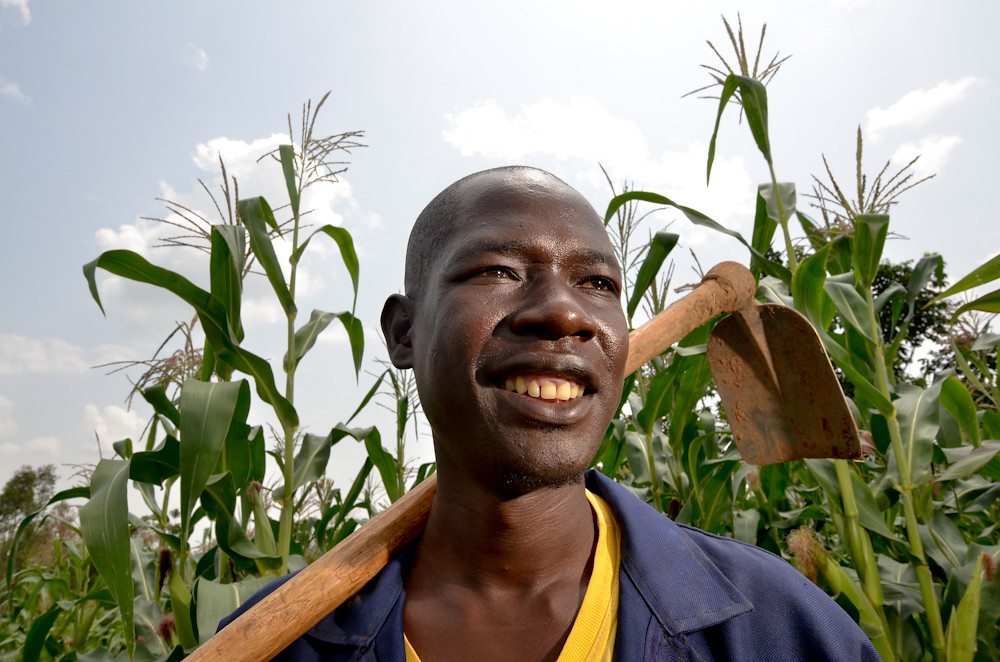
CIAT Kisumu 7


Nice story, and somehow is can sound convincing, isn't it. However when i look at the Kenyan context, i find it hard to believe, as most agri-businesses are actually started by young highly educated people with good incomes from other jobs... So where does my smallholder story fit this reality?

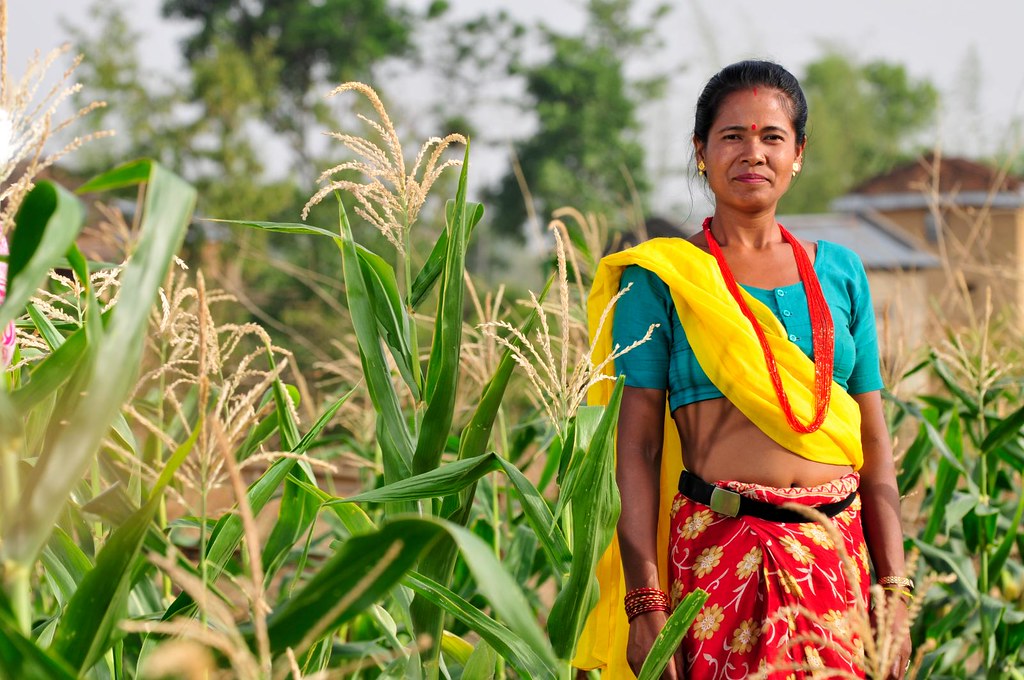
CCAFS Nepal-70 

 Some weeks ago, i joint a fascinating webinar, where Prof. Thomas Jayne investigates this question across different African countries. Only 5% of the medium scale farms are in fact smallholder that have commercialized, all other are or privileged rural population who by inheritance have relatively own big land or urban investors. Will this 5% be enough to justify our work in the up-coming years? or do we need to rethink what we truly want to focus on?

In the meantime a look at this fascinating presentation below  or check the website!


Tuesday, September 13, 2016

A reflection from the Bill and Mellinda Gates Foundation

Walking out the visitors center of Bill and Melinda Gates foundation visitors center, I realized that I have not written any new blog post on my blog for more than 6 months. Sometime daily preoccupation takes over life, and without noticing one loses those spaces for refection and for sharing those reflections.


I have just spent a week in Seattle, headquarter to Microsoft but also the Bill and Melinda Gates Foundation to join a meeting on how to make big data work the agricultural sector in the developing world. After the meeting, i spend half a day in the Gates Foundation visitors' centre, a place that has the ambition to inspire its visitors to make a difference.


The center is fully interactive, inviting the visitor to learn more about who Bill and Melinda Gates are, how they came about founding the foundation and its guiding principle. I admired the simplicity with which complex problem such health, poverty and education are addressed, without loosing its essence. 

I particularly enjoyed the intersecting wheels of agriculture that only could make turn the whole machinery if soils, water, seed, market and support comes together. I am still wondering why some of our research still does not consider theses interactions... and yes if you ask me the equation is missing livestock... (feed, water + seed, animal health, breeds, market and support).


The agricultural success machinery
Also there is a very instructive video on which Bill explains why he does not invest into climate change mitigation and why he actually does in biotechnology such as  GMOs. His reflection is quite simple, what has a market and is a business opportunity should be done by the industry, what is not is supported by Gates foundation. Drought tolerant seeds for the developing world are not sufficient commercial for the industry to develop them, yet they might play a critical role in mitigating climate change for the most vulnerable people in the world.


There are many things i did not know about Gates foundation. For example, it is behind the AGRA initiative, the initiative that among others funds many small and medium innovative enterprises in the agricultural sector in Africa. Also they run a whole program in the US to support homeless people, especially giving access to homeless children and youth to access high level education. One big effort also goes into health, among others into the eradication of polio and malaria.


As i left the visitors center, i walked to Seattle downtown realizing that already 4 times i directly or indirectly benefited from Gates Foundation money, for my multi-dimensional spatially explicit ex ante environmental trade-off model, for this conference on big data for the agricultural sector in the developing world and finally by making the new chicken breed Kuroiler available in East Africa combined with the AGRA conference on social enterprises. All four experiences have lead to radical rethinking of modelling approaches (that boldly ignore the farmer), of data collection, processing and dissemination (are our data portal really the answer?) or of sustainable business models for the poor. 


None of us has the right formula to make the world a better place for every one even those we tend to forget. We are all on a learning through trial and error journey, but some of us are radical re-thinker who challenge the status co (and have probably learned through errors). I have been deeply impressed by the strong vision that Bill and Melinda have, to question the question and invest time, money and passion to see their vision implemented on the ground both in the US and the developing world. Their objective is not only to bring change but to inspire others to bring change or to be an impatient optimist. The visit at the visitors centre has open my eyes on how much their vision and investment has given me the opportunity to re-think my work, to challenge my own small status co, how much they have actually inspired me to bring change without me noticing. 


At the end of the exhibition, the visitor is asked to come up with her/his own plan to contribute to make the world a better place... I decided to make sure that my blog becomes lively again, that it may be an (unbiased?) voice from the ground in the developing world and a space where reflection (radical rethinking?) is possible. I hope you will join the new start of this journey!

Friday, September 18, 2015

How will your life look like by 2050?

Recently i have been quite involved in doing foresight work, i.e understanding how we will be living in 2050. What will be the role of a smallholder? Where will food production take place? What environmental impacts will changes bring?


What i have learned over the last year analyzing data and traveling the developing world is that food production, and more particularly livestock keeping in not something rural, it is found all over including the high end areas of Nairobi. The biggest changes up to 2050 will be expected at the urban-rural fringe, where there is still space to produce at commercial or even industrial scales and where ways to reach the market both in terms of consumers and in terms of input (commercial feeds, veterinary services) in a short time.

Deepening myself into the topic, i found the shell new lenses on cities, showing how cities will change over the next decenies. They found 6 categories of cities around the world, offering us a new base to think about the urban-rural divide and its up coming developments : how will food be brought to people into each of these types of cities? what will be the role of agricultural production within the boundaries of these cities? And how will its suburb be organized?


A fascinating topic that hopefully we will take up soon. In the meantime get your own copy of the shell new lenses on cities here.

Sunday, May 17, 2015

When real estate companies discover agriculture

It is with great intersted i read the "seeds of gold" the agricultural supplement of the Kenyan daily nation yesterday. It is about HessConsultant, a real estate company i came accross when i was looking into buying a flat in Nairobi. To my big astonishment, they where not building houses, but building gated farms, like gated communities in Nairobi (set of townhouses that share security).
A gated farms shares security, water access and professional advice. A very interesting new concept for commercial farming in Kenya, providing 25 four acre plots, these are sizes where lots can be done and is commercially viable.

Gated farms
The owners of the plots have all their different business plans from horticulture to livestock and are very confident. What is missing in this discussions is the synergies that theses 25 farms could have by working together, for example the poultry farm providing input to the dairy farm with the poultry excrement, or the crop residues to livestock.
Where as the concept as presented is a classical commercial agriculture model relying on outside inputs, it might be worth to look at how these different farms could complement each other to produce commercially in a closed and sustainable system. An opportunity that these farmers should not miss, and an initiative that i will hopefully visit one day, when it will be fully set up!

Find here the full article.

Friday, August 15, 2014

When tomatoes become a luxuary ...

Over the last month, my budget for vegetables suddenly exploded... price in Nairobi for fresh food just dramatically went up, especially tomatoes doubled since i am here (ok there is also a seasonal effect in this price change)... The canteen everyday just serves cabbages as if another vegetable had disappeared from the market... I got so tired...


But I belong to the lucky people who can afford to enter a shop an by more expensive vegetables, even tomatoes. However, this significant price increase is fueling inflation in Kenya, making life for poor people even more difficult.


See the recent article about how food prices are changing the daily life of poor people in Kenya.
http://www.standardmedia.co.ke/business/article/2000131015/why-most-households-are-dropping-tomatoes-off-their-menu

If you eat some fresh vegetable of your choice today, remind all those people who probably struggle to just get some sukuma wiki (local cheap cabbage).

Kenya: Phillip Abuya has seen a drastic change in his diet, thanks to soaring tomato prices, in a complex phenomenon that has altered the meal composition for millions of other households across Kenya. Tomatoes have fallen off his shopping list, and have been readily replaced by processed flavouring additives such as Royco and tomato paste. Traditionally considered an essential ingredient in cooking across the country, Abuya says he cannot afford to buy tomatoes at the current prices that are as high as Sh17 apiece. Corner shops in some residential estates are selling three large tomatoes for Sh50, and Sh10 for a medium-sized one. “I have to make do with the artificial additives when I cook,” said the 27-year-old accounting graduate who is yet to find a job. A typical meal he prepares consists of ugali and sukuma wiki. His situation is replicated in most households, especially across Nairobi, at least according to Jeremiah Njeru, who operates a grocery store in Buru Buru.
Read more at: http://www.standardmedia.co.ke/business/article/2000131015/why-most-households-are-dropping-tomatoes-off-their-menu?pageNo=1

Tuesday, August 5, 2014

Engaging young people and women in commercially viable agriculture : a mission impossible?

In the developing world more than 50% of the population are young people (below 30 years). Many of them have a great struggle to find jobs, and entrepreneurship is often seen as one option to reduce youth unemployment. But youth entrepreneurship in not just a magic bullet. Some young people are just not the entrepreneur type, and for those who are access to capital to get a start-up going is pretty difficult.Often, the western world thinks that micro-credit can be a good option for young people to start off a business. Unfortunately, nowadays micro credits with amount between 100 -1000 USD are just not enough to get something going. More high risk capital should be made available, something the Kenyan goverment in looking into right now.

Here is an Aljazeera report that looks into these issues, and interviews some of the most innovative young people in Kenya.


It turns out that i know some of these young people and know about their struggle to get start up capital. The Kenyan government low interest governmental loans for young people gives some hope. However, no one really believes that the Kenyan government will really give out sufficient loans and on merit base.

Making commercially viable agriculture accessible to young people is an interesting option for youth entrepreneurship that Aljazeera does not mention. Jolly Poultry, the chicken farm that i have recently started up, is now looking into getting more young people in poultry farming. Poultry farming is a relative low entry business, meaning in amount of money needed to start up is relatively low. Especially in livestock there are good margins. Jolly Poultry does now offer training to young people and offers them a space to think about their own farm, to choose the right infrastructure, make the right choices fitting their personal situation and needs.

We hope in this way to open the door to poultry farming for some young people and give them are more interesting perspective of life in the Kenyan agricultural sector..


Friday, February 14, 2014

How pinapple business can lift up a whole region.

Africa is potentially one of the most promising market for the up-coming years. Swiss TV visited Swiss people working in Africa and benefiting from these emerging market. Find here the overview of the whole TV program.

One Swiss, lives in Ghana and produces pineapple. It shows the challenges of producing fruits for the international markets, but also how innovative creative ideas can be implemented. A biogas plant using the residue of the pineapples to get the energy for his drying plant.


Usually when investor come, local smallholders loose their market, and do not really benefit from the trade and export market. In Ghana this is different.  Maik Blaser, who operates the company contracts local farmers to produce for him : he gives out the pineapple plants and guarantees buying the produce for at a price that is fixed in advance (future contracts). In this way, smallholders can benefit the export market, make money and send their kids to school.

Finally, the plant is hiring many people offering decent wages outside of the primary sector...

Working in Africa is definitely not easy, but creative solution can really make a change... this is just another good example that no NGO is needed to support Africa...

Wednesday, February 27, 2013

The politics of global food security

Recently, Inside Story, an Aljazeera program looked into how food security will change with climate change. It discusses an UN as well as a CGIAR report that predict that staple food production will decrease in many developing countries as a result of climate change.
The discussions suggests,that politics plays a key role in promoting new more climate resistant crops could allows to slower the trend of decreasing staple food production. Also land grabbing and speculation on food could play a key role in high staple food price and should be regulated to reverse the trend.

Have a look at this interesting program, that includes an interview from my former colleague at ILRI!


Aljazeera summarize as follows the main facts about global food security :
  • According to a UN commissioned report, by 2050, the crop yields of wheat could fall by 13 per cent and rice by 15 per cent  
  • Scientists say yam, barley, millet and lentils may become new staples as these crops can withstand harsh weather conditions  
  • Scientists say adopting new crops could be a cultural challenge  
  • Agricultural systems will struggle to feed nine to10 billion people by 2050  
  • The report predicts that the cost of feeding livestock will become more expensive  
  • Climate change could also affect the intensity of crop pests and diseases  
  • Scientists are trying to develop heat and drought resistant crops  
  • The report calls for global investment in more sustainable agriculture and recommends allocating more funding for agricultural research  
Check it out yourself under  http://aje.me/SyT8Hn.

Wednesday, January 9, 2013

Land grabbing or development : a reflection from Mali


Recently i have reported from a new campaign, why poverty?. They produce short and long movies about controversial issues linked to poverty. What I like most, is that movies from this campaign are not polarizing, but trying to show the different stakes and sides from the problem.

I just watched the movie on "Land rush", and really liked the way the movie tries to show that direct foreign investment into agriculture in not per se a bad thing (also see http://catherinepfeifer.blogspot.ch/2012/11/land-grabbing-or-development.html). It follows an investor who tries to buy in the local population into the project, making sure that his project benefits to development of the local community. Have a look, it is a impressive movie showing the good side but also the turn downs of such big projects.


Basically the investor tries to plant sugar (that needs irrigation), each part of the sugar farm should be maintained by smallholders (whose land has been taken away) and who becomes agricultural contractors. A similar project seem to be a great success in Zambia, where people have been lifted out of poverty, as they earn now enough and get access to free health services and education.

However what i miss out of the discussion is a bit food security, not so much at local scale (as the contracted farmers would earn enough to buy food), but at global scale shouldn't we actually focus on grain production rather than sugar and try to get the world food price down for staple food? (see http://catherinepfeifer.blogspot.ch/2012/12/hunger-for-profit.html). The other point that is not discussed in the movie is water. Sugar cane is very water intensive. Where does it come from? is it sustainable? and how will the sugar project change the water access for the local population, both for the ones that buy-into the project and those who opt out?
And my last concern, how can we insure that the benefits that are given to the community are going to be there in the long term, or in financially difficult times? will the management of the sugar plant be participative? what will be done to avoid corruption?

But in general, I think it is a great try to make agricultural development based on market opportunities, allowing theses farmers to move away from their dependency on aid.
It makes me very sad to see that with the Mali Coup d'Etat, the sugar cane project lost all its support from the government and could not be implemented, whereas all the other investors that are truly land grabber just could continue. It is a missed opportunity to prove to the world that market based agricultural development that benefits to the communities is possible.

Saturday, November 10, 2012

Land grabbing or development?

With increasing climate variability, nomadic pastoralists in arid and semi-arid agro-ecologies get more difficult time. The lack of fodder and water is threatening their herds. Very little is known about what the right way to support these pastoralists and increase their resilience: should we improve their livestock management, developing smart early warning information systems about availability of water and fodder (with smartphone applications for example)  and make sure that nothing hampers their mobility (like foreign direct investors)? or should we try to settle these nomadic people and teach them how to grow crops in water stressed area? 
Up until today there is no answer to this question : both the livestock and crop pathways have not yet been studied also because of the lack of evidence on the ground. The Ethiopian government, despite of the uncertainty, is in favor of the settlement (it is said that the major reason for settling is control over the region rather than livelihood improvement). Therefore land has been given to an Israeli company to start a pilot project to produce crops in arid areas with ground water (like in Israel). The company has started to build up goodwill of the communities by drilling wells that serves for the community livestock. Also part of the production is supplied to the pastoralists. Jobs are created
Somehow it looks like a great initiative from which we will be able learn what works and what doesn't. We will also be able to discover how pastoralists will adapt their livelihoods. Most probably part of the family will settle and work for the commercial farms get access to cash and food the other part of the family might continuing nomadic life. Combining the livestock and crop might increase the resilience of the pastoralists households, also insuring access to water and food during the droughts. 
Some open questions remain : is there a contract that obliges the commercial farmers to provide food to the community? or do they have the option to switch to export products only leaving the locals hungry? what is the impact the israeli project on mobility of livestock? How much groundwater is available, on how does the government insure that there is no overuse of the groundwater?
Somehow my intuitions tells me that this model can improve resilience and livelihoods of pastoralists, only if few commercial farm settle, allowing a cohabitation between nomadic and settled live. An upcoming research question will also be : what is this thresholds allowing for cohabitation of the two lifestyles? how does the contract with the commercial farmers need to look like?
The israeli pilot project is not just a pilot for the Ethiopian government, but also for livestock scientists. It will definitely challenge our concepts and allow us to learn. A story to follow up. 


Find here the article published last week in the English reporter about the Israeli pilot project : 

Some say Somali and Afar regions are deserts, Israelis dub it a “bread basket”

By Yonas Abiye

Looking at a wide portion of Somali or Afar regions, one might be tempted to call it as an unproductive or non-loam soil because of the hottest temperature and the acacia trees as well as thorny prosopis juliflora (derogatorily otherwise known as Woyane tree).
Meanwhile, in the eye of anyone from Israel, this is a funny view. For them, Somali or Afar areas are like a virgin and fertile land.
For Ethiopian pastoralists, whose livelihood depends on animal husbandry, agriculture had almost ‘zero position’. For them livestock are everything. Most of them have a belief that there is no life without livestock.

Though the Ethiopian government, as a national development strategy, had attempted to introduce the agriculture system to pastoralist areas, most of them seem hardly manageable to accept agriculture as an alternative means to their livelihood. Their life is always mobile.

Within these prevailing facts and challenges an Israel company, Agropeace, came to Ethiopia two years ago to engage in the country’s large-scale agriculture mainly focusing in the mass production of biofuel plants and floricultures as well as crops, unlike most local as well as oversees investors who do not dare to engage in such ventures in the region. This is obviously seem that many of the investors, if not all, prefer putting their money near fertile lands of the country around Addis Ababa and in the nearest and relatively modest towns.

Meanwhile, Agropeace looks determined to grow more in one of the country’s hottest and remote areas of Somali region such as Shinile and Gad districts.

In fact, for a longtime, ploughing lands or having agriculture practice has been an unusual, or unpreferable business in Shinile and Gad localities which are not very far from the town of Dire Dawa.

Having secured nearly 2,000 hectares from the Somali region four years ago, Agropeace launched its first pilot project by producing maize and caster seeds. Since such kind of agri-business has not been common in the pastoralist's areas, for Agropeace it was a challenging mission to gain the support of the local residents.

According to the existing tradition of most pastoralists, every plot of land belongs to their communal property where they feed their cattle no matter the title deed given to them as is common in other parts of Ethiopia. As a result, the Israel company had not received positive welcome from the resident pastoralist communities from Shinile as well as Gad.

So, the company had to work hard to get the goodwill of the pastoralists. Eventually since water shortage is the serious problem of the, Agropeace first built around six wells and delivered water to the community for their livelihood and to their livestock. Next, in its first year the company produced tomato, green pepper and maize and distributed it to the community. This was also coupled by teaching them a new trend of agricultural production on how to produce it and create employment opportunities.

Recently, the company organized a two-days field trip where its major shareholders from the US and the UK, along with the Israeli Ambassador to Ethiopia, as well as local officials visited the project sites in Shinile and Gad.

Briefing on the progress of the project, the founder of the company, Zir Brosh, told visitors that “the project is very promising. So far, from this pilot project, we have learnt that the area is very fertile and suitable for castor, any crops and vegetables so that we are able to grow year round. “

Yohash Zohar, the general manager of Agropeace Ethiopia, said that despite some challenges the company faces as an initial development cost the company is profitable in a short period of time.

“This project, I believe, will be a benchmark for Ethiopia and will attract many other foreign investors,” he told The Reporter.

“We truly believe that the drier regions of Ethiopia such as Somali and Afar regions can actually be the bread-basket of Ethiopia,” he said, adding that with the right development and usage of underground water they (Afar and Somali regions) can produce more cash crops probably for all other parts of Ethiopia together.

He also explained that the advantage of investing in the Somali region is also advantageous, logistically citing its proximity to the Port of Djibouti.
“It makes a lot of sense to invest in such areas,” Zohar said.

According to the general manager, the company is investing a total amount of 20 million dollars for its 2000 hectare project, out of which 70 percent of the investment loan is acquired from Development Bank of Ethiopia (DBE) while the rest is partly financed from Agropeace, development partners as well as from the income generated from the project itself.

He told The Reporter that the company aims to start exporting in 2013 for the first time, starting with some 2000 tons of castor seed that is estimated to be roughly worth about 2.5 million dollars.

So far, over 350 hectares of land has been cleared for castor production.

“In Israel we have a lot of experiences in developing deserts and turn it into productive agricultural farm. Once you have enough water and use it with kid gloves, it will be advantageous because being very dry is an advantage. When you have water for irrigation, you can absolutely control how much water you can use for your farm.”
For the company, infrastructure development is a bottleneck challenge that has already forced it to incur core investment costs.

Anteneh Gelaye, chief operation manager of the project, explained that such a kind of investment is the first project in the area.

Anteneh told The Reporter that at that demonstration site, Agropeace has carried out pilot project and has seen satisfactory results particularly in castor seed, soya bean, groundnut as well as maize.

“Though this areas is semi-desert, for example, last year using Israeli technology we grew an American maize seed. And we have harvested about 80 quintals from a hectare while is 30 quintals in normal case.”

The Israeli Ambassador to Ethiopia, Belaynesh Zevadia, hailed the company’s project saying, “I’m happy about this promising achievement. They did a great job.”

She also told the company, “I hope in a couple of years, you would reap good production.

“There is a jewish saying that goes “If you save one life, you will save the world”, Belaynesh said after she saw the water wells the company provided for the local residents “I was born in Gondar and grew up in Addis Ababa before leaving for Israel when I was 17. I didn’t know we have such kind of place. Now I’m proud of being Jewish. I’m proud of Ethiopia. Please keep saving more lives.”

Similarly, the vice president of development DBE, Tadesse Oge’e, praised the company for its project.

“Your commitment to invest in such kind of area is very fantastic while most investors prefer to invest in Addis Ababa and surrounding areas. We are ready to support this project and continue to support it.

Issayas Kebede, from Ministry of Agriculture, on his part said, “This is the kind of development that Ethiopia seeks. When you lose, we lose, when your gain we gain.
For a long time the area was known as one of the country’s smuggling corridor and black market zones.