Showing posts with label Burkina Faso. Show all posts

Saturday, December 30, 2017

An end of year reflection : what can we learn from pastoralists?

It has been a very busy end of the year, and i am just noticing that my blog remained silent for two moths and many of the interesting learning will only appear in 2018. But as the end of the the year approaches, it is time to reflect about 2017 first. It was a year that took me to Burkina Faso and Ethiopia twice for the CLEANED project that aims to assess environmental trade-off of intensifying livestock value chains in developing countries, to Somaliland where i have been setting up a GIS lab and working with the local government on the livestock sector, and to Northern Kenya.


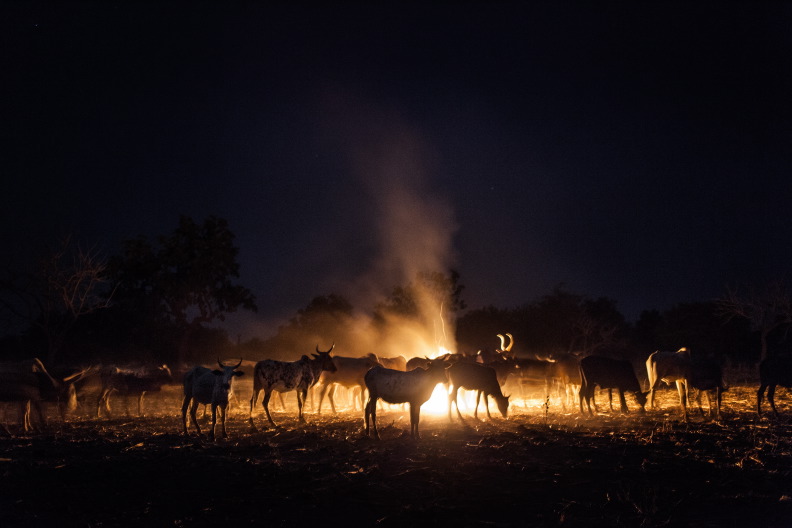
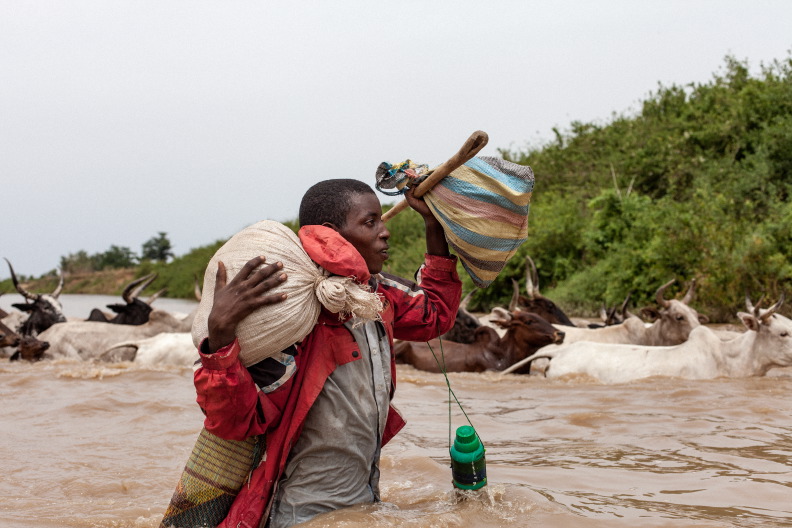
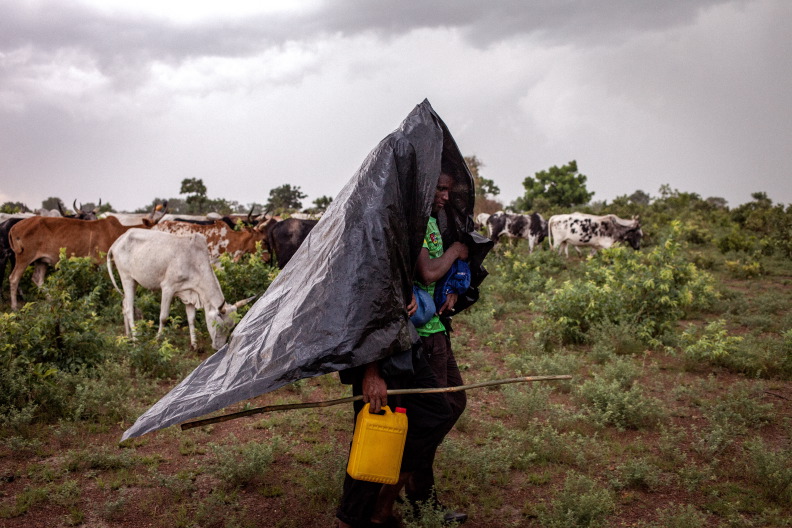
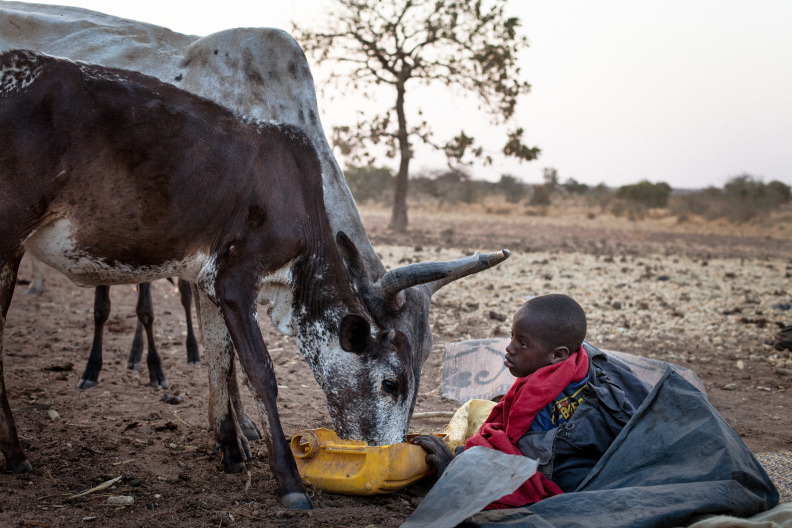
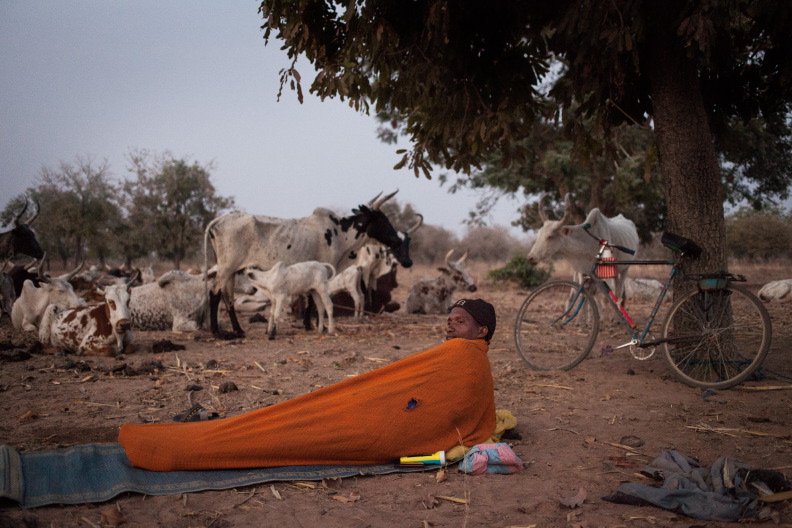
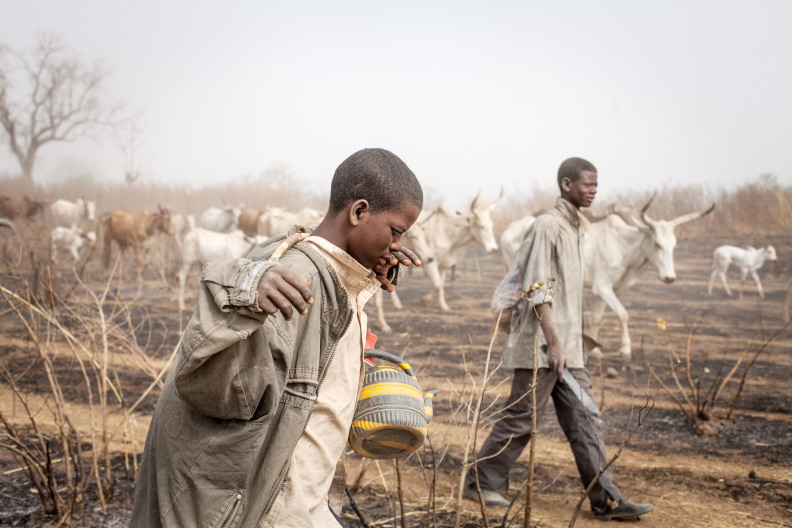
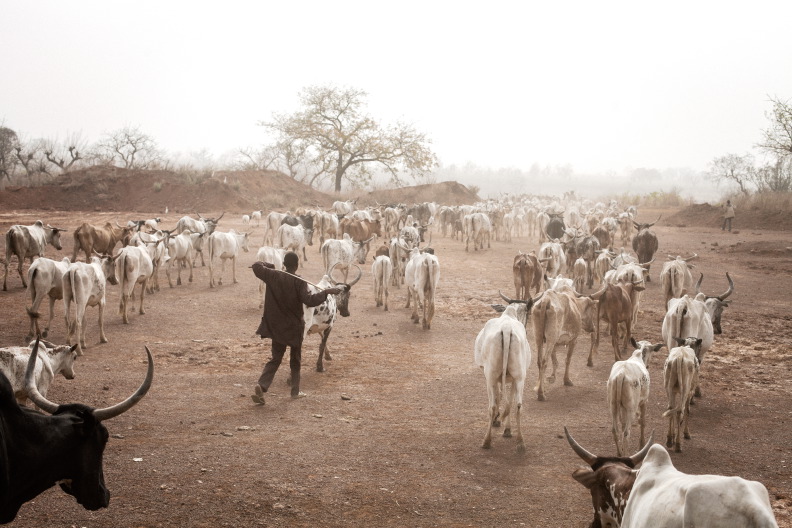
So what did 2017 bring? for me it was the year where I engaged with pastoralists across Africa, in Burkina Faso, Somaliland and Kenya and discovered a fascinating world, where all the logic I know about was challenged.


Pastoralists have a very different way to see the world than the smallholders farmers I usually work with. And it might sound stupid, but because pastoralists are moving with their animals in very harsh environment, they are not really interested in accumulating "stuff" that is heavy to carry around and they are used to live with almost nothing. This is why many of the incentives that we usually use, such as money or in kind just do not work.


Pastoralists value their community and their animals. Therefore, working on the relationship with these communities and build up trust is the better incentive than some materialist item. Also, I have discovered that pastoralists have their own information sharing mechanism that they have developed and improved over centuries and nobody is waiting for any phone app to bring a revolution, they have the information they need. Also information is shared within relevant networks within clans, and there are good reasons why that information is not public : governments do not know how many pastoralists are crossing boarders (a concept that is nonexistent to many pastoralists) and therefore cannot tax animals going from one country to the next, others clans who might compete on ressource might not yet know where the good pastures are. So bringing digital products to this world might do more harm than good, and a better understanding of what information can be shared with whom is necessary before thinking of digital products.


Across all countries, pastoralism is under pressure. There is often conflict on land among pastoralist clans themselves, as in many places the number of livestock is above the carrying capacity of the land which has led to serious land degradation and a resulting lack of available feed and fodder. Also there are conflicts between pastoralist and crop farmers, on who has the right to use the land. Pastoralism is often seen as an old-fashioned lifestyle that is doomed. But especially, in Western Africa there is a strong movement to fight for the right for such a traditional lifestyle.


Meeting pastoralists and working with anthropologists this year have changed the way i look at agricultural intensification in Sub-Saharan Africa. Clearly, there is an urgent need to increase food production in Africa where population will double over the next 30 years. High potential area, where rain is abundant and soils are fertile, will have to play a big role in producing more food, also smallholder farmers in those area are keen intensifying there production that they believe will bring more income. But, in dry low potential areas it is less clear what intensification of production can bring, and people making use of these area have a right to choose their lifestyle, even if it goes against the mainstream thinking. Who are we to push pastoralists towards something they do not believe in for the sake of feeding the world?


Clearly, in the transition zone, between the high potential area and dry rangeland, conflict between the two world emerges. In those zones, land use planning and clear rules that regulate fair access to land and its biomass need to be implemented so that both pastoralists and non-pastoralist can co-habitate. Combined with efforts of land rehabilitation, and emerging opportunities outside of the agricultural sector that can offer jobs to those who do not want to remain a pastoralist, might support a productive and sustainable  traditional pastoral production that sustains a decent livelihood for those who choose to live in this way.


As we move to 2018, let's keep an open mind to those who go through life differently and learn to appreciate what they can teach us, the same way pastoralists have reshaped my understanding of agricultural intensification this year. I remain with thanking you for following this blog, that in the meanwhile has up to 2500 clicks a month, and wish you a happy new year!


Note that all pictures in this post are taken from here. They are made Gille Coulon, an award winning photographer. He has exhibited these pictures at the "centre culturel francais" in Ouagadougou, an exhibition that was lucky to see during one of my many visits in Burkina Faso.
Monday, September 18, 2017

Facilitators : the never mentionned factor of success

During the participatory stakeholder workshops in Burkina Faso, Ethiopia and Tanzania, workshops cannot be hold in English. So in many countries we had to rely on translators. For example, the participants in Burkina Faso spoke French, Jula and More, but there was no common language to all, so we really had to juggle to make sure that we have everyone on board and no one gets excluded because of language barriers.

Set up of the week
We have hired facilitators/reporters to work with smaller groups of participants, who speak the local language. It also means, that we had to trust the facilitators to do their job well, as we had little means to cross-check what is going on during the group discussions. For example, in Ethiopia the workshop was held in Tigrinay, which is spoken in Tigray but is not the national language, which in Amharic. So in Ethiopia even our national partner who helps us organize the workshop is not able to understand what is going on.
  all documentation is on poster so that power cuts do not disturb the training
A huge responsibility therefore weighs on the hired group facilitators/reporters. To make sure that they get the skill to do their job well, we implemented a two days training. The first day aimed at giving the facilitators the skills to "give everyone in their group to do the best of their thinking". This part of the training were based on Sam Kaner's book and approach, and we mainly focused on active listening. On the second day, we when through a "dry run" of the workshop, to show facilitators/reporters what their job is, what we expect from them, and which results we would like to reach.
training active listening in Ethiopia
During the workshop, facilitator/reporter were assigned to discussion groups in pairs, so that one can facilitate and the other take notes, as well as always being two in difficult situations.

drawing out techniques in French
After the workshops, facilitators and reporters wrote a report about what was discussed and what has happened in their groups in English or in French. This is often our only way get access to the information that was shared in many different languages.
Training in Burkina Faso
The facilitators/reporters did a fantastic job in all three countries : they had to learn new skills and understand their role in a very short time, handle difficult situation is their groups and remember to report everything with as many details as possible. They are key to our success and to the data we can collect.
facilitators at work in Burkina Faso
Let me take this opportunity to thank the three teams in all 3 countries for their enthusiasms to take up a challenging task and the great job that they have done to support us.

Thursday, August 24, 2017

One day in 2030 or how to get participatory economic indicators

During the recent participative stakeholder workshop, not only we have tried to understand how stakeholder see their own production system involving in the future but also trying to understand what success would look like.

Traditionally, economist used GDP at national level, and income or ownership of assets to measure success. More money and more assets means wealth and therefore is success. Yet, the people we work with value many different things, such as family life, the access to traditional food, or getting a given position within the community. So success is more than money and we need to identify how this success can be measured.

two ladies making sure that their vision is taken into account into the future storylines
On the second day of the workshop, my colleagues of mine asked the stakeholder participant in stakeholder groups with similar interests to write down the story of one or two successful virtual characters, and describe a usual day in 2030.From that storyline, participants will have identify what are the indicators that the two characters are successful.

In Burkina Faso, the dairy processing lady was married to the butcher of the area. Their life will be shaped by a traditional Muslim life rhythm. Children will have access to schools, family will be supported by hired staff, and mobility will be improved as the family will own a car or at least a motor bike.

storyline from the pastoral group
the second part of the storyline


For the pastoral community, the successful life meant that they could maintain their traditional lifestyle but also with some modernization, such as aluminum mobile parks, motorbikes for improved mobility and cleared access rights to pasture.

From those storylines, many indicators could be identified. Participants then made an individual vote for the most important ones. Interesting in Burkina Faso, these were religious indicators, such as being able to visit Mecca, being able to follow Muslim rules and improved mobility, whereas in Ethiopia, high education for children and the adoption of new technologies came out more importantly.

  
The selected indicators from the different groups in Burkina Faso
To me, it was a new approach to get information from stakeholder about what they value, in a way that is very appealing and easy to stakeholder. I am quite impressed by the results we got.

Tuesday, August 22, 2017

Talking like them : collecting information from local decision makers

Last months were busy, i went to Ethiopia and Burkina Faso to implement a participatory stakeholder workshop with local decision makers, including local government, extension service, but also farmers, input seller, traders, processors, farm organizations and other NGO intervening in the area.

The objective of the first day was to understand how these decision makers see and categorize the livestock production in their area and to what extend they see that these systems will be changing over the next 15 years in view of the still doubling of the African population. 

The banner describing the project in French for all the events in Burkina Faso
Why do we need to know this? The DFID funded project i am working on, foresees the parametrization of the CLEANED tool, to allow decision makers to simulate different livestock intensification option and get multiple environmental indicators along water, greenhouse gazes, biodiversity and nitrogen content of soils. This model will only be of use to the decision makers if it actually reflects their understanding of the livestock production systems or practices. Too often standard models are brought to local level without adjusting them to the local context and the local understanding. In other words, we need to make sure that the model talks like they do in order to be useful.

A group mapping the production systems in Ethiopia
On the first day of the workshop, we used a so called snowballing negotiation, two people try to agree which are the major livestock practices or production systems in the area. When they agree the find an other group of two and re-discuss and negotiate in four. Then they find another group of 4 and negotiate in 8. Then there is a facilitated plenary negotiation about which are the local practices or production systems, and how they can be grouped to make four working groups.

Then in four working groups, each group discusses one identified practice or production system. They map on printed maps where the system/practice is found and in a reporting sheet note the characteristics in terms of breed, adoption rate, number of animal, feed basket, manure management and input/output markets.

A group presenting results to plenary In Burkina Faso 
In the afternoon, the participant write a letter to the future generation describing how livestock keeping will be done in the future and aims at identify completely new practices/productions system that are not observed today. If such a new production is found then a group will need to take it up. otherwise the same group discuss the evolution of the production by 2030, mapping possible changes on the map.

Wondering what we have learned from this process? stay posted the up-coming posts will discuss this!

Friday, March 17, 2017

Where the *** did the savanna go?

One objective of the my past trip to Burkina Faso was to validate some of our maps, and more particularly the land cover map.

So we decided to go North of Bama and to turn right into the dust road to Padema, there were the savanna should be.
the road to Padema


And this is what we found in the savanna :
crops between mango trees

A papaya tree plantation

up coming mango tree plantation

horticulture

animal feeding on crop residues in the fields
So basically everything but savanna. It has a bit more tree than what is classified as cropland, but everything is somehow used for crop, with the exception of what is classified as savanna with trees, which we could find and is still the original natural vegetation

original vegetation

Some natural vegetation
Conclusion, we will have to think hard on how we want to define grazing and cropping area in our environmental model!

Friday, March 3, 2017

Milk? that's a matter for the minister of Interior!

During our visit in Bama, in Burkina Faso, we talked for some hours with the livestock union. At the certain stage of the discussion, we asked them about gender roles.
Milk is clearly a matter for women, who handle both the milking and the sale. This makes sense as milking cows just like women tend to stay home when young men go on transhumance with the rest of the herd.
the representative of the livestock union
But we digged further... we discovered that men and women own their livestock within a herd. We were told that in some households women own more cattle than men, but men would take care of them. So we dug even further. So who decides about the sale of an animal? then it became very complicated and the men started talking and laughing.

the goats in the back not bothering about our gender discussion
The translation for us then was : madam is the ministry of Interior, she takes all the important decision in the household, but never openly, men will implement the decision from their ministry and do as if it was theirs!
The men going home after our meeting

We were discussing just with men. Next time we go back we will need to talk to women to see their version of the story!

Sunday, February 26, 2017

Sheep : the panty of the herd

In my last field work in Bama in Burkina Faso, we had a very long and interesting discussion with the livestock union, bringing together the association for dairy farmer, for fattening farmer and butchers.


We had a lengthy discussion with them about their cattle keeping systems and their challenges. No word was lost about goats and sheep. So we did as always, we just asked. 

We discovered that cattle keeper do not really keep goat because they have different grazing patterns. Therefore one cannot go on transhumance with cattle and goats. Also, in their understanding, if someone has goats, is complete, meaning it is a system on its own. 

However, a cattle keeper will always keep sheep. They have similar grazing pattern than cattle and therefore can be kept together. Often livestock keeper have a breeding strategy, and manage their herd accordingly. So they do not want to sell off cattle when they have a urgent money need. That's why they keep sheep : in order to have something small to sell off to pay for something unexpected, such as a family member who gets sick and one need money for health care. It is a risk management strategy that allows them to not touch their herd. "Sheep is the panty of the herd" they told us. The last thing you can strip before you have to touch you herd. 

Monday, January 23, 2017

pushed to innovation : meet Konde the dairy farmer

On my last field trip to Burkina Faso, I met Konde, they dairy farmer in the periphery of Bobo-Dialassou.

Konde, the dairy breeder

Konde is a livestock breeder, he has 4 milking cows, 12 cows on the farm and a certain relatively big amount of cattle somewhere else. He is a farmer who took the bet for dairy production and 10 years ago started breeding improved cross breed. He has been part of the a training program for artificial insemination program that was implemented in 2009 by the government and the support from Canada. He today can perform artificial insemination, and produces calves he can sell up to 10 more than what he could get for a local calf. He currently feeds his animal crop residue from sesame, maize, sorghum that he produces on his own land, and natural grasses that he has collected from communal land such as river banks and road side, as well as grassing land from others for which he could get the authorization to collect the grasses for free. He also was feeding a proper concentrate produced in Ivory Coast that he could access at subsidized prices. As we came just after the harvesting season, cattle is roaming in his fields to eat the crop residue. In the dry season he would also feed cotton seed cakes, maize and wheat bran and bier residues that he would buy, as well as rice straw he can get for free. With this diet he can produce 12 liters of milk per cow. He mentioned that he had now more milk with his four milking cows, than before with this 150 headed local breed herd.

In terms of feeds, he has tried out several approaches. In the past, he was growing maize for silage. As he would use the whole crop, the community said he was crazy, but he could appreciate the higher productivity he could get thanks to this approach. However, this year he did not produce any silage, because he could not hire people to the work. The next door mine are offering better paid jobs and agricultural labour is scares. Yet, looking at the labor that is needed to collect the natural grass, we wonder if this is the real reason.

Secondly, he had tried to plant braccaria, a high performing and nutritious grass. But because his fields where not fenced roaming animals have eaten the roots. Today, he has a field planted with alfalfa. This had been suggested by a Dutch expert who also financed the electric fencing of the field. Yet, the alfalfa did not perform well, other grazes grew quicker and overtook the field. He had actually would have preferred to have braccaria, but the expert had pushed for alfalafa, and himself would not know where to get braccaria seeds from.
the fenced field
Konde is also the president of a farmer organization bringing 30 farmers together, mainly with the propose to produce sufficient milk so that a collector comes and picks it. But they are also exchanging information, advice and feeds.

Konde had two wells with electric pumps, the one that he set up himself is still working, the other one set up by a project was defect. But water access is not a problem. Also there was a tractor and some machinery that looked pretty old and broken, but we were told that is was still in use.

self financed water system

We have also asked him about his breeding strategy. He seems to document it all, to understand concept of F1 (first cross) F2 (offspring from first cross), yet is does not seem to have a breeding strategy. It sounds like an experiment.

unused trough

Clearly, Konde is a farmer to whom many innovation were brought to. He has tried many of them, and abandoned most of them, such a silage, alfalfa, the unused trough. And few he has kept some of them, the artificial insemination or the water pump that he has build from his own money. He clearly shows that what he had to invest his own resource is still in use today, what he got for free through project he does not pursue after the money is gone. Once again, pushing farmer to adoption of technologies and innovation does not lead to long term success.

Thursday, January 12, 2017

Do livestock keepers consume animal products?

There is an ongoing debate among us on whether a poor livestock keeper is more likely to consume animal sourced products. We always have the hypothesis that if the denomination of the animal product is small, for example an egg, or is separable, such as milk, poor livestock keeper will have an improved nutrition. But they will sell the whole animal and therefore not consume meat.

livestock keeper representing the livestock union

So on the last trip to Burkina Faso, we have asked the livestock keepers from the livestock union in Bama, about their consumption of milk and some breed experts.

We came up with the following rules rules :
  • sheep give milk but it is not consumed by human for cultural reason
  • goat breeds that give milk, milk is first given to the goat baby, if there is enough there there might be some home consumption
  • some goat breed, especially the smaller ones, do not give sufficient milk for home consumption
  • in traditional cattle breeding system, a cow that gives birth will produce milk, which is first given to the calf. If there is enough, the milk is consumed within the family and if there is even more then the milk is sold. 
  • there are also dairy farms. We could not figure out what is more important to them : home consumption for improved nutrition or milk sale for cash. Literature suggests that the more a livestock keeper is connected to market, the less there is a home consumption for his/her own production.

So we got interesting insights on how to link livestock ownership to nutritional benefits through animal sourced food. A linkage worth investigating more.

Wednesday, December 21, 2016

Where does all that feed come from?

The environmental trade-off model, i am working with lately, is based on the idea that feed can move within the whole study area! A strong assumption?So in the last field trip to Burkina Faso, we investigated the matter.

In fattening and dairy systems in peri-urban Burkina Faso, feed is mostly brought to the animals. Most of the feed is crop-residue, from maize, sesame, sorghum and other local crop. Most of the farmers have their own, but also buy the crop residue from their neighbor, or the buy the right to graze on the field with residue.

maize residues prepared for sale to the neighbor
There is also some natural grasses that can be found on common land, but some farmers also get grass from privately owned land for which they got the usage right. Most farmers pay for these right, but we met one who got grass for free.
Natural grass dried and stored for the dry season
Next to grass and crop residue, farmers feed other local feed, from local tress but also a whole bunch of concentrates. Firstly, around Bobo-Dialassou is providing a full concentrate produced in Cote d'Ivoire at subsidized price.
The concentrate from Cote d'Ivoire

Secondly, because of the area produces cotton, the cotton seed are transformed to oil. The residue of that oil production is called cotton seed cake. Though it is produced locally, the high fat content makes cotton seed cake a high value feed with a regional market. The cotton seed cake from Bobo can be found up to Mali, where the price are better.
Sesame ready for seed extraction, afterwards the residue is fed to animals

The state company that produces oil and cotton seed cake at high quality has specific rules about cotton seed cake. Their oil is more expensive than the one of the competition. So the oil is always sold with the cotton seed cake, which can fetch a higher price. So only the one who buys the oil can get the cotton seed cake (that is of better quality than the one of the competition). So the big oil buyer will also develop a market for the cotton seed cake. Because prices are so much better in Mali, the oil buyers usually sell the cotton seed cake abroad.

Cotton seed cake from the state company (left)
Cotton seed cake from the local companies

In conclusion, feed moves around quite a bit within the study area but also move out of the study area for animals in drier locations such as Mali.

Moving feed out of the study area